What Is a Miswak? How to Trim, Chew, and Brush With One
A miswak is a teeth-cleaning twig from the Salvadora persica tree. Here's how to trim, chew, and brush with one, and how it compares to a toothbrush.
Table of contents
What exactly is a miswak?
A miswak is a thin teeth-cleaning twig cut from the Salvadora persica tree, a shrub so tied to this use that it's often called the toothbrush tree or arak tree. It goes by several names depending on where you are: siwak, sewak, arak, or peelu. Roughly the length and thickness of a pencil, it has been part of daily oral care for centuries across the Arabian Peninsula, the Horn of Africa, North Africa, the Indian subcontinent, and Central Asia.
There's nothing to assemble and nothing to add. The twig itself is the toothbrush: you chew one end until it frays into soft bristles, then brush. That plainness is a big part of why it has stuck around so long. This is a plain-language guide to what a miswak is and how to use one as a simple self-care habit. It isn't dental advice, so if you have gum disease, braces, or other dental work, check with your dentist before you change your routine.
Is miswak actually good for your teeth?
The honest answer is that the evidence is encouraging but still incomplete. The World Health Organization recommended the miswak for oral hygiene in 1986, and in a 2000 international consensus report on oral hygiene it noted that chewing sticks may have a role to play while calling for more research to document their effect. You can find the WHO's broader oral-health guidance on the World Health Organization site.
Published reviews of Salvadora persica report that the plant contains naturally antibacterial compounds along with small amounts of fluoride and silica, and dental researchers have run trials comparing miswak use to regular brushing for plaque and gum health. None of that makes a miswak a cure for anything, and most dentists still treat brushing with a fluoride toothpaste as the everyday baseline. It helps to think of a miswak as a traditional tool worth trying, not a medical treatment.
How to use a miswak, step by step
Using one takes about a minute to learn. Here's the basic sequence:
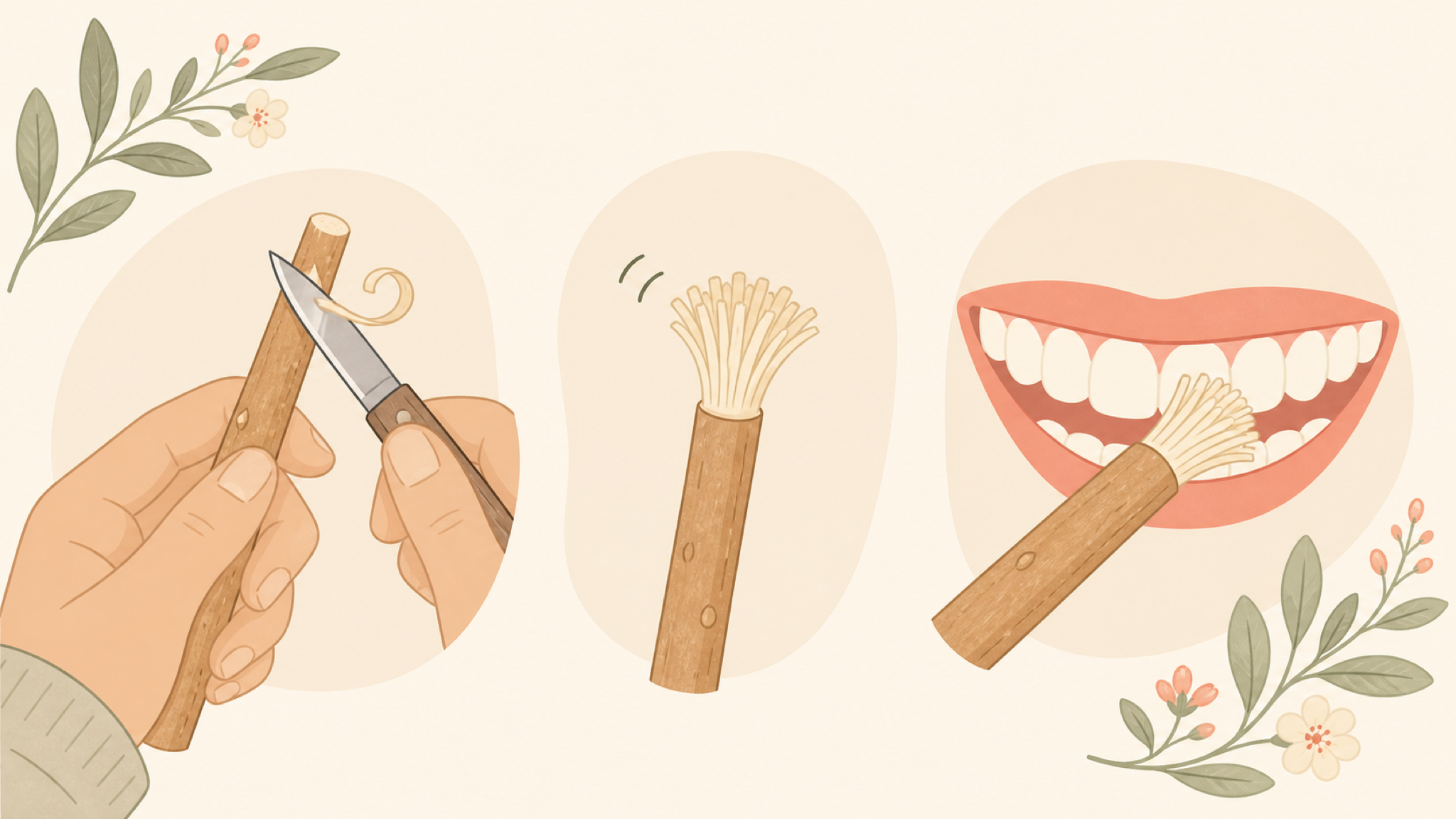
- Trim about 1 centimeter (roughly half an inch) of bark off one end to expose the pale inner fibers.
- Chew that exposed tip gently for a minute or two until the fibers separate into soft, brush-like bristles.
- Dip the bristles in clean water if you like. You don't need toothpaste.
- Hold the miswak like a pen and brush in short strokes, moving from gum to tooth, with small circles over the front, back, and chewing surfaces.
- Spend about two minutes total, using light pressure. You're cleaning the teeth, not scraping them, so go slowly.
- Rinse your mouth and the bristles when you finish.
If your gums feel sore or you notice bleeding that doesn't settle, ease off the pressure and check in with your dentist.
How do you keep a miswak fresh?
Trim the worn tip and let the stick dry between uses. After several brushings the bristles fray and darken, which is normal. When that happens, snip off the top 5 to 10 millimeters, chew a fresh tip, and you're back to clean fibers.
Storage matters more than people expect. Rinse the bristles after brushing and keep the miswak somewhere it can air-dry, like an open cup on the counter, instead of sealed in a plastic bag where moisture lingers. Replace the whole stick once it gets too short to hold comfortably or the fibers stop softening well.
Miswak vs. a regular toothbrush
A common question is whether a miswak can replace your usual toothbrush. Here's a simple side-by-side of how the two differ in everyday use:
| Feature | Miswak | Regular toothbrush |
|---|---|---|
| Bristles | Chewed from the twig itself | Nylon, factory-made |
| Toothpaste | Not required | Usually used with fluoride toothpaste |
| What you carry | Just the stick, no water or paste needed | Brush, plus paste and often water |
| Replacing it | Trim a fresh tip; swap the stick when short | Replace every few months |
Plenty of people don't pick one or the other. They keep a miswak handy for a quick freshen-up during the day and still brush with fluoride toothpaste morning and night. If you wear braces or have had recent dental work, ask your dentist which approach fits your situation.
Making it part of your routine
The easiest way to get value from a miswak is to attach it to something you already do. Traditionally it's used at set moments, including before sleep, so folding it into a calm wind-down before bed is a natural fit. A midday brush after lunch works well too, since you don't need a sink or toothpaste.
If you want the habit to actually stick, the same start-small approach that helps any new routine take hold applies here: keep the stick somewhere you'll see it, pair it with an existing cue, and begin with once a day before you ask more of yourself. A miswak is a small, low-cost thing to try, and building the habit gently is what makes it last.
This article is for general information and self-care education only. It is not medical advice, diagnosis, or treatment. For questions about your health, talk to a qualified healthcare professional.