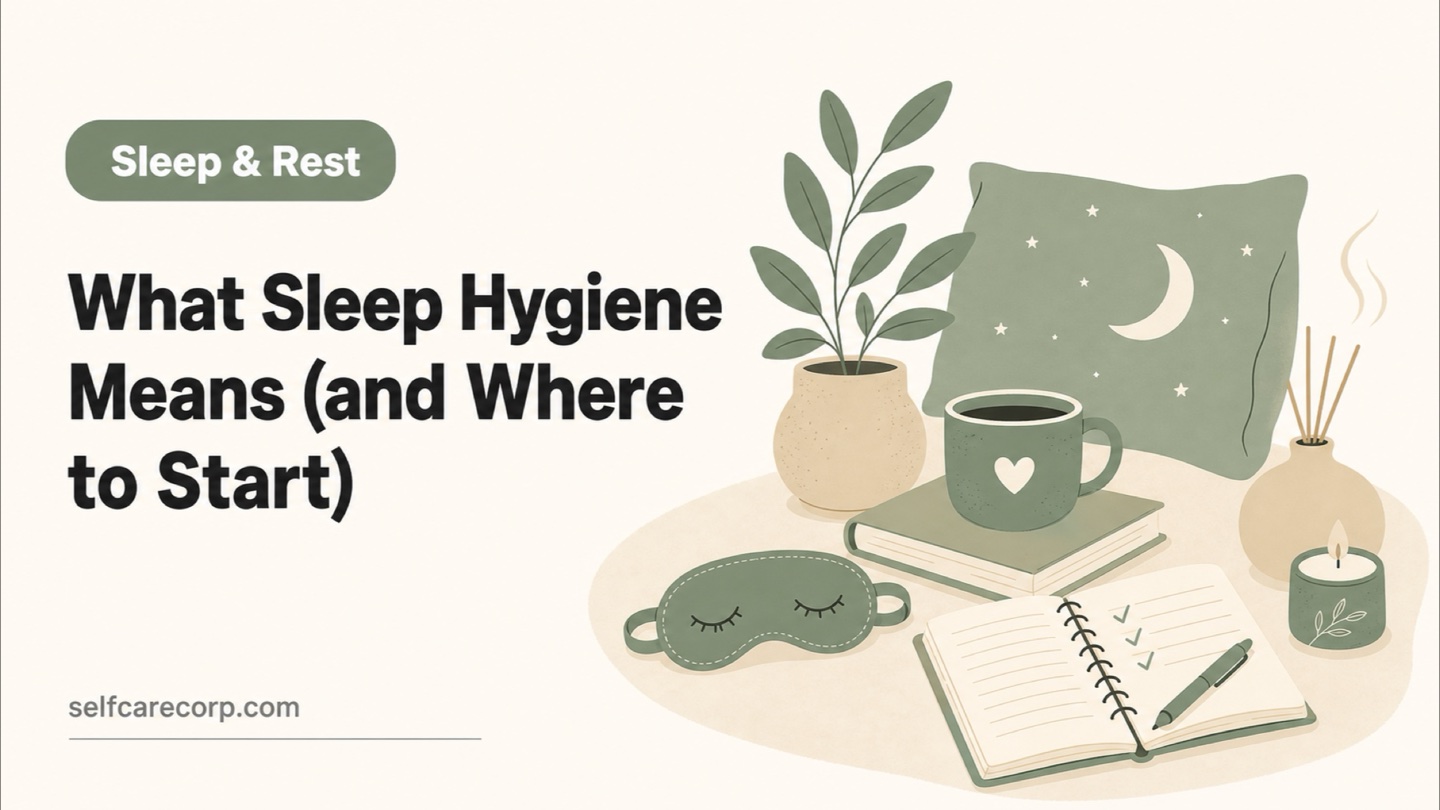
What Sleep Hygiene Means (and Where to Start)
Sleep hygiene is the daily habits and bedroom setup that help you rest: a steady schedule, a cool dark room, and less caffeine and screen time before bed.
Table of contents
Sleep hygiene is simply the everyday habits and bedroom conditions that make good sleep more likely — a consistent schedule, a cool and dark room, a calm wind-down, and limits on caffeine and screens late in the day. The Sleep Foundation describes it as having both a bedroom environment and daily routines that support consistent, uninterrupted sleep, and the Centers for Disease Control and Prevention (CDC) recommends that most adults get 7 or more hours a night. This guide covers gentle self-care habits for generally healthy adults who want to sleep better; if you have ongoing trouble sleeping even with good habits in place, that is worth raising with a doctor rather than something to sort out on your own.
How many hours of sleep do you actually need?
Most adults need 7 or more hours a night. The CDC sets its recommendations by age, and the totals climb the younger you are. Treat them as a target range rather than a strict rule — some people feel their best around 7 hours, others closer to 9.
| Age group | Recommended sleep per night |
|---|---|
| School-age children (6–12) | 9–12 hours |
| Teens (13–17) | 8–10 hours |
| Adults (18–60) | 7 or more hours |
| Older adults (61–64) | 7–9 hours |
| Adults 65 and older | 7–8 hours |
The CDC has reported that a large share of adults — roughly a third — regularly sleep less than seven hours, so if you are falling short, you are in plenty of company. Hitting your age range most nights matters far more than any single perfect one.
Set up a bedroom that invites sleep
Your room can do a lot of the work for you. The Sleep Foundation suggests keeping your bedroom cool — around 65 degrees Fahrenheit (about 18 degrees Celsius) — and erring on the cooler side, since your body temperature naturally dips as you drift off. Pair that with darkness and quiet, and reserve the bed for sleep so your mind starts to link lying down with rest.
- Keep it cool: aim for about 65°F (18°C), cooler rather than warmer.
- Keep it dark: block streetlight and standby LEDs, or wear an eye mask.
- Keep it quiet: earplugs or a steady, low hum can soften sudden noises.
- Save the bed for sleep, not for scrolling, working, or watching shows.
Build a calming wind-down routine
Give your body a clear signal that the day is ending. The Sleep Foundation suggests budgeting about 30 minutes to wind down and unplugging from phones, tablets, and other screens roughly 30 to 60 minutes before bed. Fill that window with something low-key and repeatable — a warm shower, a few pages of a book, gentle stretching, or slow breathing.
And if sleep will not come? The Sleep Foundation advises that if you are still awake after about 20 minutes, get out of bed and do something calm in low light, such as reading or stretching, then return when you feel drowsy. Lying there frustrated tends to stretch the wait out, so a short reset usually works better than forcing it.
What should you cut back on before bed?
Ease off caffeine in the afternoon and evening. Caffeine is a stimulant — a substance that raises alertness — and its effects can linger for hours, so a late-afternoon coffee or energy drink may still be working against you at bedtime. The Sleep Foundation recommends cutting down on caffeine as the day goes on.
A few other habits can quietly chip away at your night:
- Long or late naps: keep naps short and to the early afternoon so they do not crowd out nighttime sleep.
- Heavy meals and alcohol close to bedtime, which can leave sleep lighter and more broken up.
- Bright screens in bed, which keep your mind switched on right when you want it settling down.
Keep your schedule steady, and start small
The most powerful habit of all is a consistent wake-up time. The Sleep Foundation recommends keeping a fixed wake time on weekdays and weekends alike, and shifting your schedule gradually — by up to an hour or two — rather than in big jumps. A steady rhythm trains your body to feel sleepy and alert at about the same times each day.
You do not need to change everything at once. Pick one habit — a fixed wake time, a cooler room, or a screen-free half hour — and give it a week or two before adding the next. Small, repeatable steps are what turn good intentions into routines you actually keep. For deeper guidance, both the CDC and the Sleep Foundation publish practical, free resources on healthy sleep.
This article is for general information and self-care education only. It is not medical advice, diagnosis, or treatment. For questions about your health, talk to a qualified healthcare professional.