How to Find More Joy in Everyday Life, One Small Moment at a Time
Everyday joy grows from noticing and savoring small good moments. Try research-backed habits like savoring, Three Good Things, and a real thank-you.
Table of contents
When designer Ingrid Fetell Lee set out to understand where joy actually comes from, she found something that had little to do with mindset. In her 2018 TED talk, "Where joy hides and how to find it," Lee describes how joy is not only an inner state you cultivate — it also has tangible, physical roots in the things around you. As she collected the objects and places that people from very different cultures called joyful, the same handful of aesthetic qualities kept turning up. In other words, there are two doors into a brighter everyday life: what you notice, and what you surround yourself with.
More everyday joy usually comes from noticing and savoring the small good moments you already have, not from waiting for a big event to arrive. Positive psychology researchers have spent decades testing plain daily habits, such as savoring a good moment, writing down three things that went well, and thanking someone directly. The Greater Good Science Center at UC Berkeley points to these as some of the most dependable ways to lift your mood. This guide is for readers who feel generally okay but a little flat and want small habits they can start this week. It is not a treatment for depression or anxiety; if low mood feels heavy or lasts for weeks, a licensed professional is the right next step.
Why do small moments matter more than big events?
Because big wins fade fast. We adjust to new circumstances, from a raise to a new phone to a move, and then drift back toward our usual mood. That is why a handful of small, repeatable moments can shape a whole year more than one rare high.
Psychologist Barbara Fredrickson, whose broaden-and-build theory dates to the late 1990s, describes how good feelings do more than feel nice in the moment. In her framework, emotions like joy, gratitude, serenity, interest, hope, pride, amusement, inspiration, awe, and love widen your attention and pull you toward play, curiosity, and connection. Over time those small openings build lasting resources such as skills, friendships, and resilience. A short walk where you actually notice the sky is not a throwaway; it is a small deposit.
Savor the good moments you already have
Savoring means staying with a good moment on purpose instead of rushing past it. Fred Bryant, a social psychologist at Loyola University Chicago who helped shape this field, describes three ways to do it: look forward to something before it happens, sink into it while it is happening, and replay it warmly afterward.
In everyday life that can look like this:
- Before: picture Friday's coffee with a friend and let yourself feel a little excited a day ahead.
- During: set the phone down for the first sip of morning coffee and notice the warmth and the smell.
- After: at dinner, say one good thing from your day out loud to someone.
Savoring works even better inside an absorbing activity, since getting fully caught up in something you enjoy is its own steady source of joy, the kind of deep focus described in our piece on reaching a flow state.
Try the Three Good Things habit
If you want one habit to begin with, try Three Good Things. The Greater Good Science Center suggests taking 5 to 10 minutes at the end of the day to write down three things that went well, and next to each one, why you think it happened. The events can be tiny: a good sandwich, a text from your sister, a task you finally finished.
This exercise grew out of research by psychologist Martin Seligman, whose studies found that people who practiced it reported higher happiness that still showed up when they were checked again one week, one month, three months, and six months later. Writing the "why" is the part that trains you to notice where good things actually come from. You can follow the step-by-step version on the Greater Good in Action Three Good Things practice page. If a nightly journal appeals to you, our guide on building a small daily writing habit pairs neatly with it.
Write a thank-you that you mean
Gratitude gives more of a lift when you aim it at a specific person. In research summarized by Harvard Health, psychologist Martin Seligman tested several happiness exercises with a group of 411 people, and the one that produced the largest immediate increase was writing and hand-delivering a letter of thanks to someone who had never been properly thanked. That boost lasted for about a month.
You do not need a full letter to feel the effect. Send one honest text that names what a friend did and why it mattered, or tell a coworker the specific thing that helped you this week. For a plain overview of how gratitude affects mood, see this article from Harvard Health.
Design a little joy into your surroundings
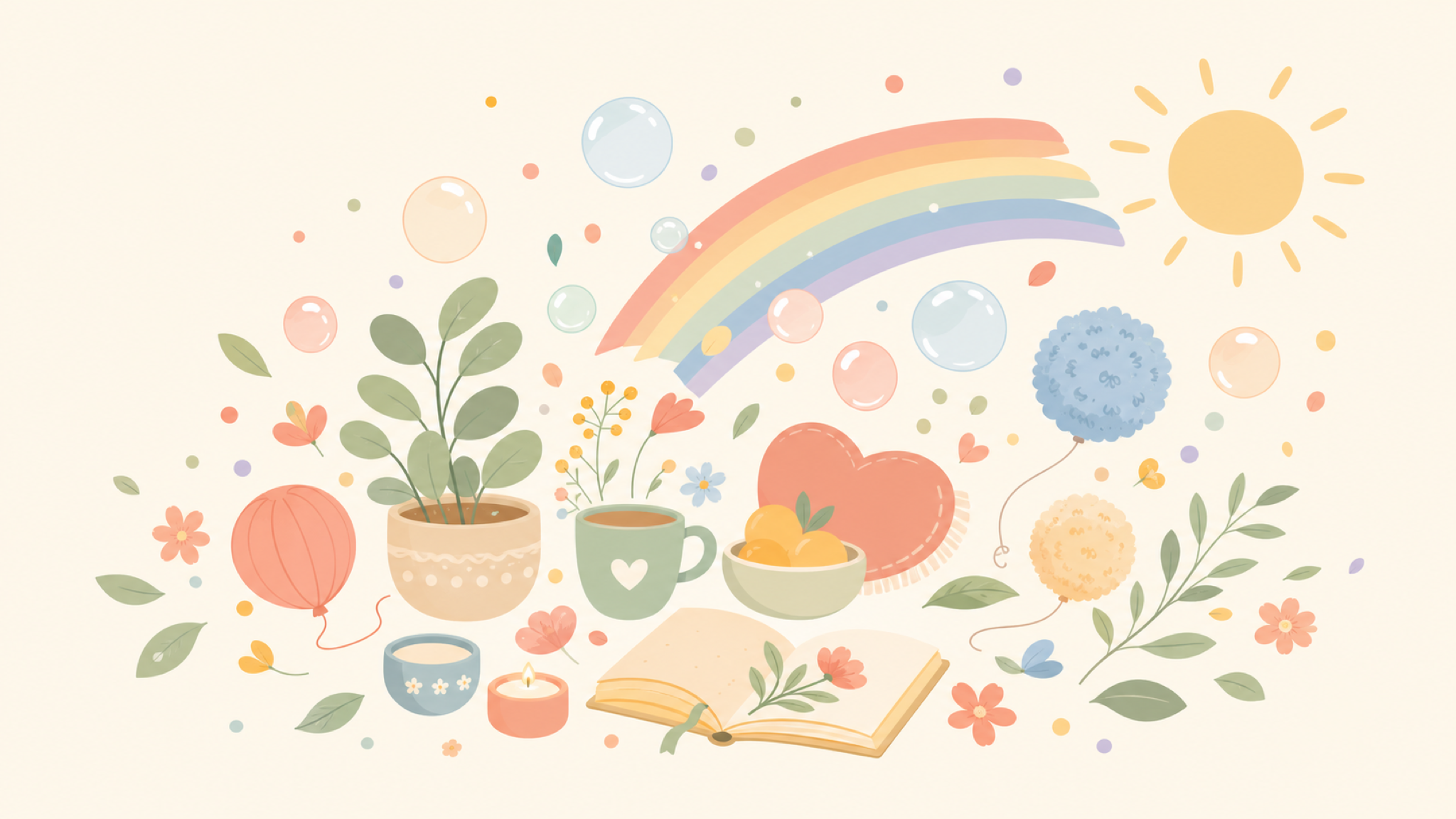
The habits above all work by changing what you notice. Ingrid Fetell Lee points to the second door: changing what is around you to be noticed in the first place. In her TED talk on where joy hides, she describes the physical qualities that turned up again and again in the joyful things people showed her — abundance and multiplicity, bright color, round and bubbly shapes, a feeling of lightness or movement, and small touches of nature. Her examples are ordinary on purpose: cherry blossoms, rainbows, soap bubbles, even a pair of googly eyes. None of them ask you to be in a certain mood; they lift you a little just by being in view. You can watch her walk through the idea in her talk on where joy hides.
The useful part is that you can build a little of this into your day on purpose. Add a hit of color to a shelf or your phone screen, keep something round or plant-like where you will see it, open the blinds and let more light in, or cluster a few cheerful objects in the corner of your desk. This does not replace savoring or gratitude, and it is not meant to. Think of it as the easy, physical complement to those inner habits — a space that meets you halfway while you practice them.
How do you keep it going when life is busy?
Start smaller than feels necessary. Pick one habit, not four, and attach it to something you already do so you are not relying on memory. Here is a simple version: right after you brush your teeth at night, name one good thing from the day. Just one. You can add a second whenever it feels easy.
Keep the bar low on hard days. A two-minute version still counts, and showing up most days matters more than doing it perfectly. If you miss a night, nothing is broken; you just pick it back up the next day. Joy in everyday life is less a destination than a habit of attention, and that habit gets stronger every time you use it.
This article is for general information and self-care education only. It is not medical advice, diagnosis, or treatment. For questions about your health, talk to a qualified healthcare professional.