How to Boost Serotonin Naturally With Light, Food, and Movement
Support serotonin naturally with morning light, tryptophan-rich foods and carbs, regular movement, and better sleep. Plus when to see a professional.
Table of contents
You can support your body's serotonin in plain, everyday ways: get outside in the morning light, move your body most days, eat tryptophan-rich foods alongside some healthy carbohydrates, look after your gut, and protect your sleep. Serotonin is a chemical messenger that shapes mood, sleep, and digestion, and Cleveland Clinic notes that about 90% of it is made in the lining of your gut, with only about 10% made in the brain. This guide is for everyday adults who want simple habits to feel a little steadier, not a treatment plan for depression or any diagnosed condition, and not medical advice. If your mood has been low for weeks, the last section covers when to talk to a professional.
Where serotonin comes from
Serotonin, also called 5-hydroxytryptamine or 5-HT, is a chemical that carries messages between nerve cells. Cleveland Clinic describes it as both a neurotransmitter and a hormone, and explains that at normal levels it helps you feel more focused, calm, and emotionally steady. It also works with dopamine to shape your sleep, and your brain needs it to make melatonin, the hormone that helps you wind down at night.
Here is the part that surprises many people: most of your serotonin never touches your brain. According to Cleveland Clinic, roughly 90% sits in the cells lining your digestive tract, where it helps control bowel function, and only about 10% is produced in the brain itself. Your body builds serotonin from tryptophan, an essential amino acid, which means your body cannot make it on its own and has to get it from food. That single fact is why the habits below center on light, movement, food, and gut health rather than any one magic switch.
Does morning sunlight really boost serotonin?
Yes, and daylight is one of the most researched levers you have. In a 2002 study published in The Lancet, researchers led by Gavin Lambert measured serotonin in the blood of 101 healthy men and found that the brain's serotonin production was lowest in winter and rose with the number of bright sunlight hours on a given day. That connection is part of why darker months can leave some people feeling flat.
You do not need a beach vacation to use this. Cleveland Clinic suggests aiming for 10 to 15 minutes of sunlight each day. A simple routine: step outside within an hour of waking and let natural light reach your eyes for 10 to 15 minutes. There is no need to stare at the sun, just be outdoors. Morning light does double duty by helping set your body clock, which is the same reason light exposure matters so much when the clocks change; if seasonal time shifts throw off your rest, our guide on protecting your sleep around daylight saving time walks through it. On gray days, being outside still gives you far more light than an indoor room.
Foods that support serotonin
Because serotonin is built from tryptophan, food is a practical starting point. Cleveland Clinic lists tryptophan-rich foods including salmon, eggs, cheese, turkey, tofu, nuts, seeds, oats, and pineapple. You do not have to overhaul your plate. Adding one of these to meals you already enjoy is enough to start.
Two details make a real difference:
- Pair protein with a healthy carbohydrate. Tryptophan competes with other amino acids to reach the brain, and eating some carbohydrate alongside it, such as oats, brown rice, or fruit, helps clear the path. A bowl of oatmeal with nuts, or eggs with whole-grain toast, is a friendly example.
- Feed your gut. Since most serotonin is made in the digestive tract, fiber-rich foods that feed healthy gut bacteria (vegetables, beans, whole grains, and fruit) support the system where most of the work happens.
Supporting nutrients help too: vitamin B6 and vitamin D both play a role in converting tryptophan into serotonin. None of this is about strict rules or perfect eating. It is about steady, ordinary meals that give your body the raw materials it needs.
How does exercise change serotonin?
Movement helps in two ways at once. Regular physical activity is linked to higher serotonin, and it also raises the amount of tryptophan available to your brain, since exercise shifts the balance of amino acids in your blood so more tryptophan can get through. You feel some of that as the calmer, clearer mood many people notice after a walk or a workout.
You do not need to train hard. Cleveland Clinic points to a general target of about 30 minutes of aerobic exercise five days a week, plus two strength-training sessions a week, for mood and heart health. If that sounds like a lot, start smaller. A brisk 10-minute walk counts. Gardening, dancing in the kitchen, swimming, or biking all work. The best routine is the one you will actually repeat, and the small, ordinary wins that come from consistency add up the same way noticing small moments of joy does over time.
Building it into an ordinary day
You do not need to do everything at once. Here is a gentle way to stack these habits without feeling overwhelmed:
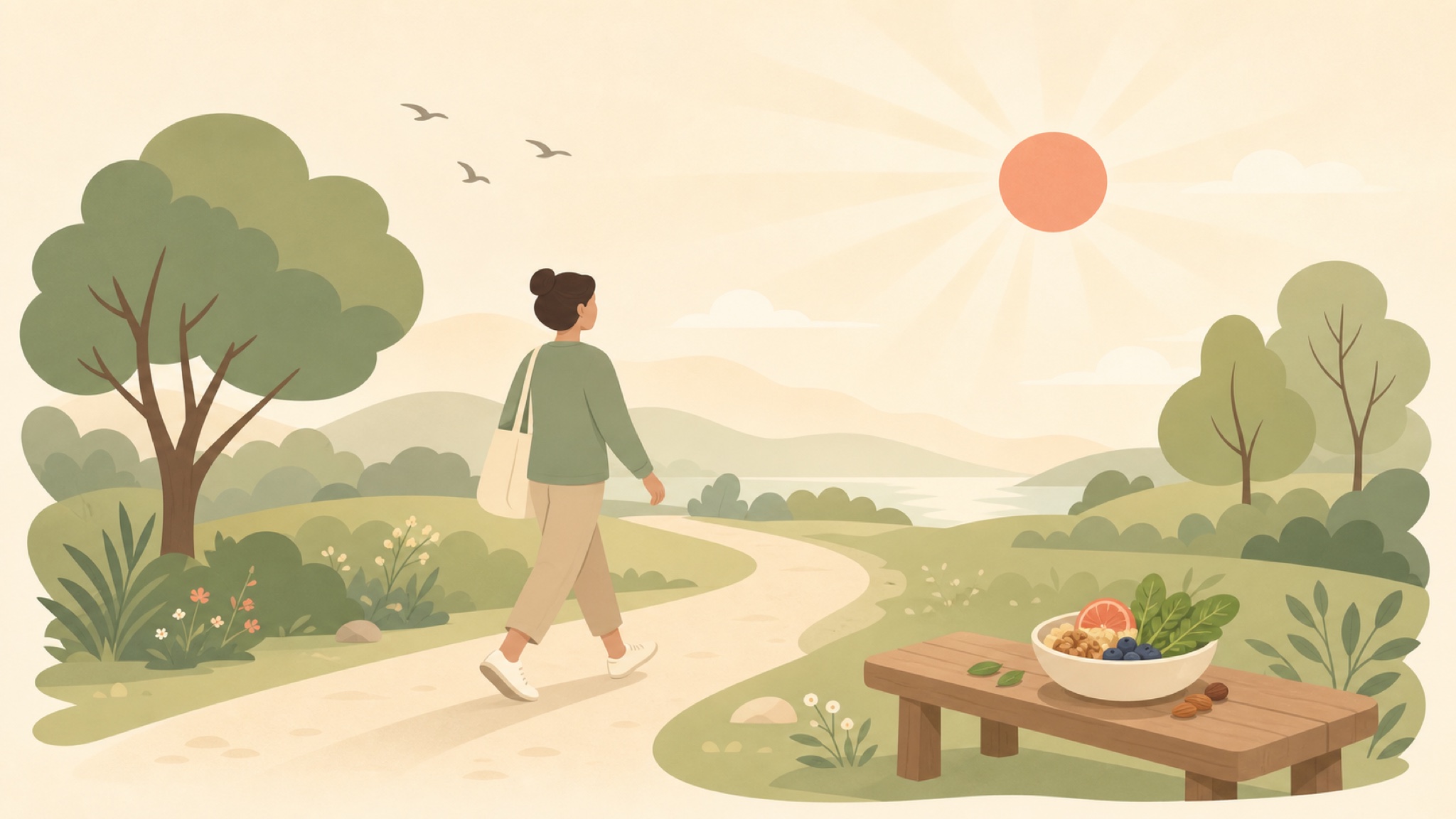
- Morning: step outside for 10 to 15 minutes of light, ideally before screens take over.
- Meals: add one tryptophan-rich food to a meal you already eat, and pair it with a whole grain or fruit.
- Most days: move for at least 10 minutes; a walk after lunch is an easy anchor.
- Evening: protect your sleep, since serotonin and melatonin are linked. Dim the lights and ease off screens as bedtime nears.
Pick one to start this week. Habits stick better when they attach to something you already do, like your morning coffee or your commute.
When natural steps aren't enough
These habits support a healthy body, but they are not a substitute for care. Low serotonin is not something you can measure at home, and persistent low mood, anxiety, or sleep trouble deserve real attention. If you have felt down, hopeless, or unlike yourself for two weeks or more, that is a good reason to talk with a doctor or mental health professional, not a sign of weakness.
A few honest cautions: do not start supplements like tryptophan, SAMe, or St. John's Wort on your own, especially alongside prescription medication. Combining substances that raise serotonin can be genuinely risky, so any supplement plan is a conversation to have with a healthcare provider first. For a plain-language overview of what serotonin does, Cleveland Clinic keeps a helpful reference on serotonin. The everyday steps here (light, food, movement, and sleep) are safe places to begin, and they are worth doing whether or not you ever need more support.
This article is for general information and self-care education only. It is not medical advice, diagnosis, or treatment. For questions about your health, talk to a qualified healthcare professional.