Ebola Outbreak: Simple Hygiene Habits and How to Stay Calm
Ebola spreads by direct contact, not through the air, per the WHO. When it's in the headlines, here are calm, everyday hygiene habits to lean on.
Table of contents
Ebola is a rare but serious viral illness, and if you have landed here after seeing alarming headlines, the most useful thing to know first is this: according to the World Health Organization (WHO), Ebola spreads through direct contact with the body fluids of an infected person, not through the air like a cold or the flu. Outbreaks do happen — almost always in specific regions, mainly in parts of Central and West Africa — and when one is in the news, official health agencies (linked below) are the place to check the current situation. For most everyday readers living far from affected regions, though, the practical self-care takeaway is small and steady: keep up simple hygiene habits, and follow the news in a way that keeps you informed without wearing you down.
This is a plain-language wellness overview for general readers building everyday habits — not medical, travel, or treatment advice. If you have a specific health concern, a possible exposure, or travel plans to an affected area, official health agencies and a qualified professional are the right place to turn.
What is Ebola, and how do you even say it?
Ebola (pronounced ee-BOH-lah) is a disease caused by a group of related viruses. According to the WHO, it was first identified in 1976, and it takes its name from the Ebola River, near a village in what is now the Democratic Republic of the Congo where one of the earliest outbreaks occurred. The WHO notes that fruit bats are thought to be the virus's natural host, and that it can pass to people from infected wild animals before spreading between humans.
A couple of numbers help put the illness in context. The WHO reports that symptoms typically appear 2 to 21 days after infection, and that the average case fatality rate across past outbreaks has been around 50%, ranging from 25% to 90% depending on the outbreak and the care available. Those figures explain why health agencies treat Ebola so seriously, and why the response leans heavily on early detection and containment.
How does Ebola spread, and how worried should everyday people be?
For people outside an active outbreak zone, the everyday risk is very low, and understanding how the virus actually moves is the fastest way to calm unnecessary worry. The WHO explains that Ebola spreads through direct contact with the blood, secretions, or other body fluids of a person who is sick, or with surfaces and materials (such as bedding or clothing) contaminated with those fluids. Just as importantly, the WHO states that Ebola is not airborne, and that a person cannot spread it before they develop symptoms.
That is very different from an illness like the flu, which can travel through the air in a crowded room. It means casual, everyday contact in a place with no active cases carries little risk. Knowing this does not make the outbreak any less serious for the communities living through it — it simply helps you hold a realistic picture of your own situation instead of a fearful one.
Where to get trustworthy outbreak updates
Go straight to the primary health agencies rather than social media, where rumors travel faster than facts. Outbreak details — which country is affected, how many cases, and any travel notices — change over time, so the goal is not to memorize numbers but to know where the reliable, up-to-date ones live. For current figures and travel guidance, two sources do most of the work:
| Source | What you will find there |
|---|---|
| World Health Organization | Global situation reports, emergency declarations, and a disease fact sheet |
| U.S. CDC | Current situation summaries, travel notices, and plain-language prevention basics |
You can read the WHO's Ebola disease fact sheet and the CDC's Ebola basics for the current, official picture. Bookmarking one or two pages like these means you always have a calm, factual place to check instead of chasing rumors.
Simple hygiene habits that support everyday wellness
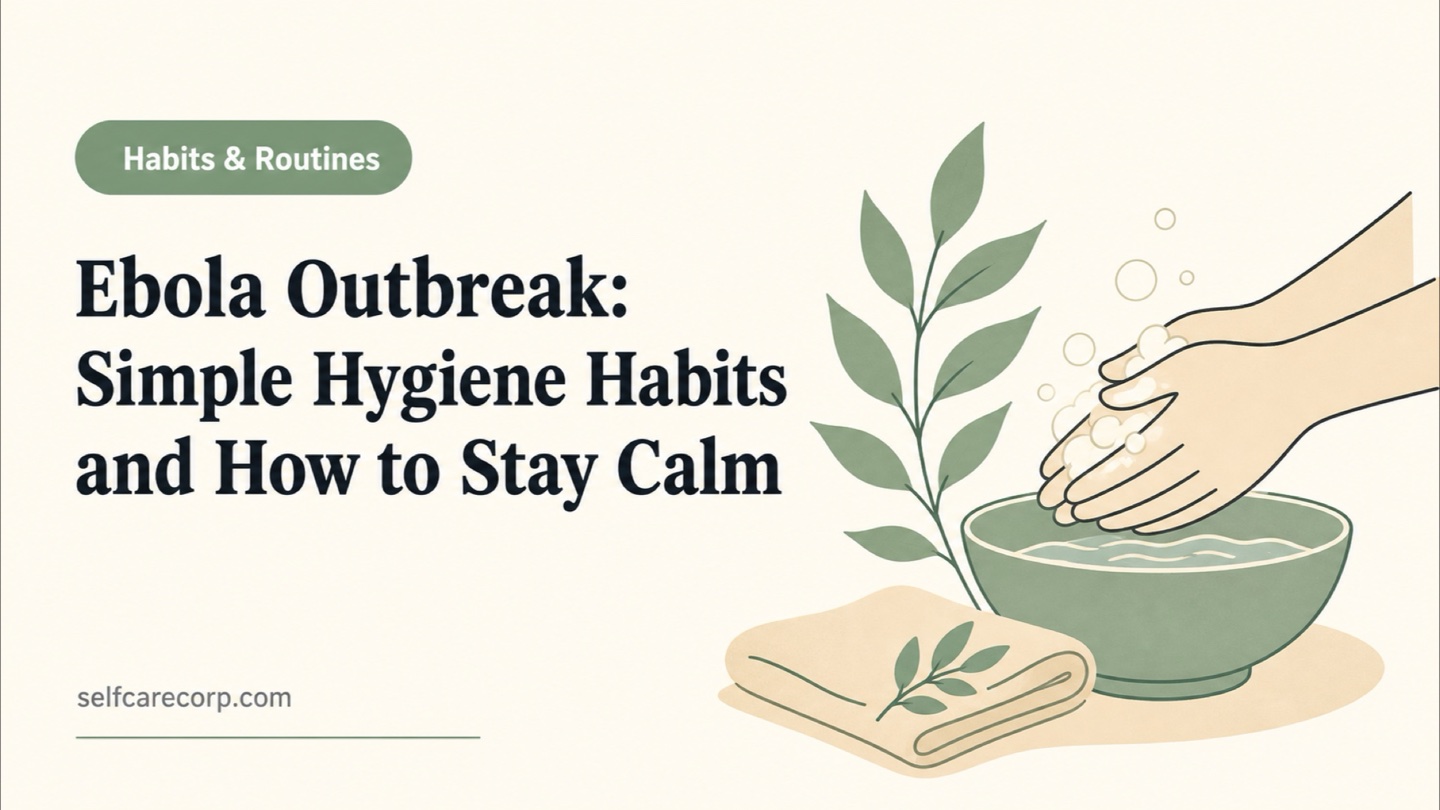
None of the habits below are Ebola-specific shields — they are the same ordinary routines that help protect you from many common germs, which is exactly why they are worth keeping year-round. The CDC recommends washing your hands with soap and water, or using a hand sanitizer with at least 60% alcohol when soap and water are not available. A few practical anchors:
- Wash with soap and water for about 20 seconds — roughly the time it takes to hum a short tune — especially before eating and after using the bathroom or public transit.
- Keep an alcohol-based sanitizer (at least 60% alcohol, per the CDC) in your bag for moments when a sink is not nearby.
- Try not to touch your face with unwashed hands, and wipe down high-touch items like your phone and doorknobs now and then.
These small routines overlap with other everyday health habits — the same wash-first, prep-clean mindset that helps you stay safe from a foodborne parasite in the kitchen, or the simple home water habits that quietly lower everyday risk. Build them into moments you already have, and they stop feeling like extra work.
Caring for your mind when outbreak news feels heavy
If the headlines are spiking your anxiety, that reaction is normal, and managing it is a real part of self-care. A few gentle boundaries help. First, check updates once or twice a day from one or two trusted sources, rather than refreshing your feed all day. Second, notice the physical signs of worry — a tight chest, shallow breathing, trouble sleeping — and treat them as a cue to step away from the screen for a while. Third, return to the basics that steady you: regular meals, some movement, daylight, and a consistent bedtime.
Staying informed and staying calm are not opposites. You can know what is happening, do the small things within your control, and still protect your rest and peace of mind.
The everyday takeaway
Ebola is a serious disease that agencies like the WHO and CDC track closely, and the communities living through any active outbreak deserve real attention and support. For the rest of us, the honest, wellness-minded response is modest: understand how the virus actually spreads, keep up simple hygiene habits you would benefit from anyway, get your facts from official sources, and guard your mental health against the pull of endless bad news. Informed, clean-handed, and calm is more than enough for everyday life.
This article is for general information and self-care education only. It is not medical advice, diagnosis, or treatment. For questions about your health, talk to a qualified healthcare professional.