How Spirituality and Religion Affect Mental Health: Benefits and Limits
Research links religion and spirituality to modestly lower depression and suicide risk for many people, plus what can hurt and simple habits to try.
Table of contents
If you have ever wondered whether faith or a spiritual practice can change how you feel, the short answer is that for many people it does, usually in a supportive direction. A 2021 review of the scientific evidence, co-authored by Duke University psychiatry researcher Harold Koenig, reports that people who are more religious or spiritual tend to have somewhat lower rates of depression and a lower risk of suicide, though the effect is modest and not the same for everyone. This piece is written for everyday readers building simple self-care habits, not as medical advice or a way to diagnose or treat any condition. If you are struggling, treat faith as a companion to professional support, never a replacement for it.
What "spirituality" and "religion" actually mean
People use these two words as if they mean the same thing, but they point in slightly different directions. Religion is an organized set of beliefs and practices shared by a community, with a tradition, teachings, and usually a place to gather. Spirituality is broader and more personal: a sense of connection to something larger than yourself, whether that is God, nature, a moral order, or simply a feeling of meaning. You can have one without the other. Plenty of people describe themselves as spiritual but not religious, and some go to services mainly for the company rather than for strong private beliefs.
Researchers who study this topic keep the two ideas separate on purpose, because they can shape wellbeing through different routes. That distinction matters when you are deciding what, if anything, to fold into your own routine.
How does faith affect depression and anxiety?
On average, more religious or spiritual people report a little less depression, but the effect is small and it varies from person to person. The 2021 review co-authored by Harold Koenig points to a meta-analysis of 147 studies covering roughly 100,000 people, which found a small but steady inverse link, around -0.10, between spirituality or religiousness and depression. In everyday terms, faith lines up with slightly lower depression, not a cure for it. Guidance from Mayo Clinic makes a similar point, tying religious involvement and spirituality to less anxiety, depression, and suicide.
The longer-term evidence leans the same way. Across 152 studies that followed people over time, the review reports that about 49 percent found religious or spiritual involvement went with better depression outcomes, while only about 10 percent linked it to worse ones. One large study of 89,708 women in the United States, included in the same review, found that those who attended services at least weekly had a much lower rate of suicide than women who never attended.
Anxiety is a softer story. Of the anxiety studies the review gathered, roughly 49 percent showed an inverse link, 40 percent showed no clear link, and 11 percent pointed the other way. So faith is not a reliable anxiety switch. For some people a calming practice or a warm community helps a great deal, and for others it makes little measurable difference.
Where the support really comes from
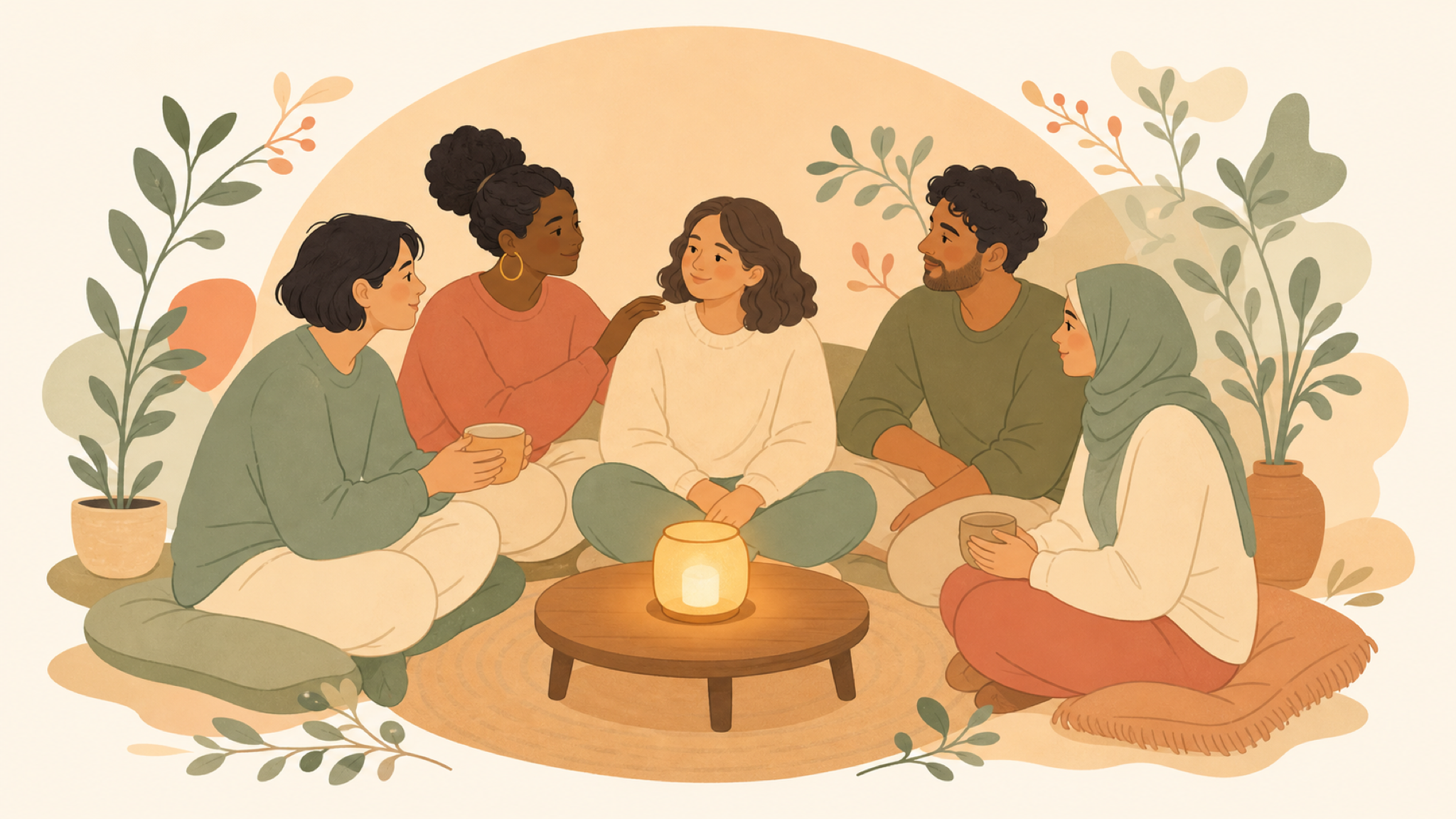
The support rarely comes from belief alone. It comes from the things faith tends to bundle together. The first is belonging: a congregation or spiritual group gives you regular contact and practical help, and steady social connection is one of the most reliable protectors of mental health we know of. The second is meaning and hope. A framework that answers "why" can make a hard stretch feel more bearable, which is part of why the American Psychological Association has published guidance for addressing religion and spirituality in therapy rather than treating them as off-limits.
Two more pieces are easy to overlook. Calming ritual - prayer, chanting, quiet reflection - slows the breath and settles the body the way many secular relaxation practices do. And coping matters: when something goes wrong, leaning on a trusted framework gives people a way to make sense of loss instead of carrying it alone. Notice that most of these are habits you can build on purpose. A weekly rhythm of gathering, a few minutes of daily stillness, a practice of gratitude - those are the measurable pieces, and they are open to you whether or not you belong to a formal tradition.
Can faith ever make mental health worse?
Yes, and it is worth saying plainly. For a minority of people, spirituality becomes a source of distress rather than relief. The 2021 review notes that somewhere between 7 and 15 percent of people use their faith in a negative way, feeling abandoned or punished by a higher power, or reading their pain as a sign of personal failure. That pattern tends to run alongside more depression and anxiety, not less. Harsh guilt, constant self-judgment, or a community that shames instead of supports can all tip the balance.
If your spiritual life mostly leaves you anxious, ashamed, or cut off from others, that is a signal worth taking seriously. A good therapist can help you sort out which parts help and which parts hurt, without asking you to give up what matters to you.
Simple ways to bring this into your self-care
You do not have to adopt a whole belief system to borrow the parts that support wellbeing. Start small and keep the pressure low.
- Set aside a few quiet minutes most days for prayer, meditation, or plain reflection. A gentle ritual like a beginner-friendly singing bowl session gives you a bit of structure if you want it.
- Write down two or three things you are grateful for a couple of times a week. Getting into the habit of keeping a simple record gives your reflection somewhere to land.
- Protect one standing connection, whether it is a faith community, a values-based group, or a regular meetup that keeps you around other people.
- Pay attention to how a practice leaves you feeling. Keep the ones that leave you calmer or more connected, and be honest about any that leave you drained.
Faith and spirituality are not a treatment, and they are not right for everyone. For a lot of people, though, they add a quiet layer of steadiness: a sense of belonging, a reason to keep going, and a few minutes of calm in a full week. If that speaks to you, treat it like any other self-care habit. Keep what helps, drop what does not, and reach out for professional support when you need more than a routine can give.
This article is for general information and self-care education only. It is not medical advice, diagnosis, or treatment. For questions about your health, talk to a qualified healthcare professional.