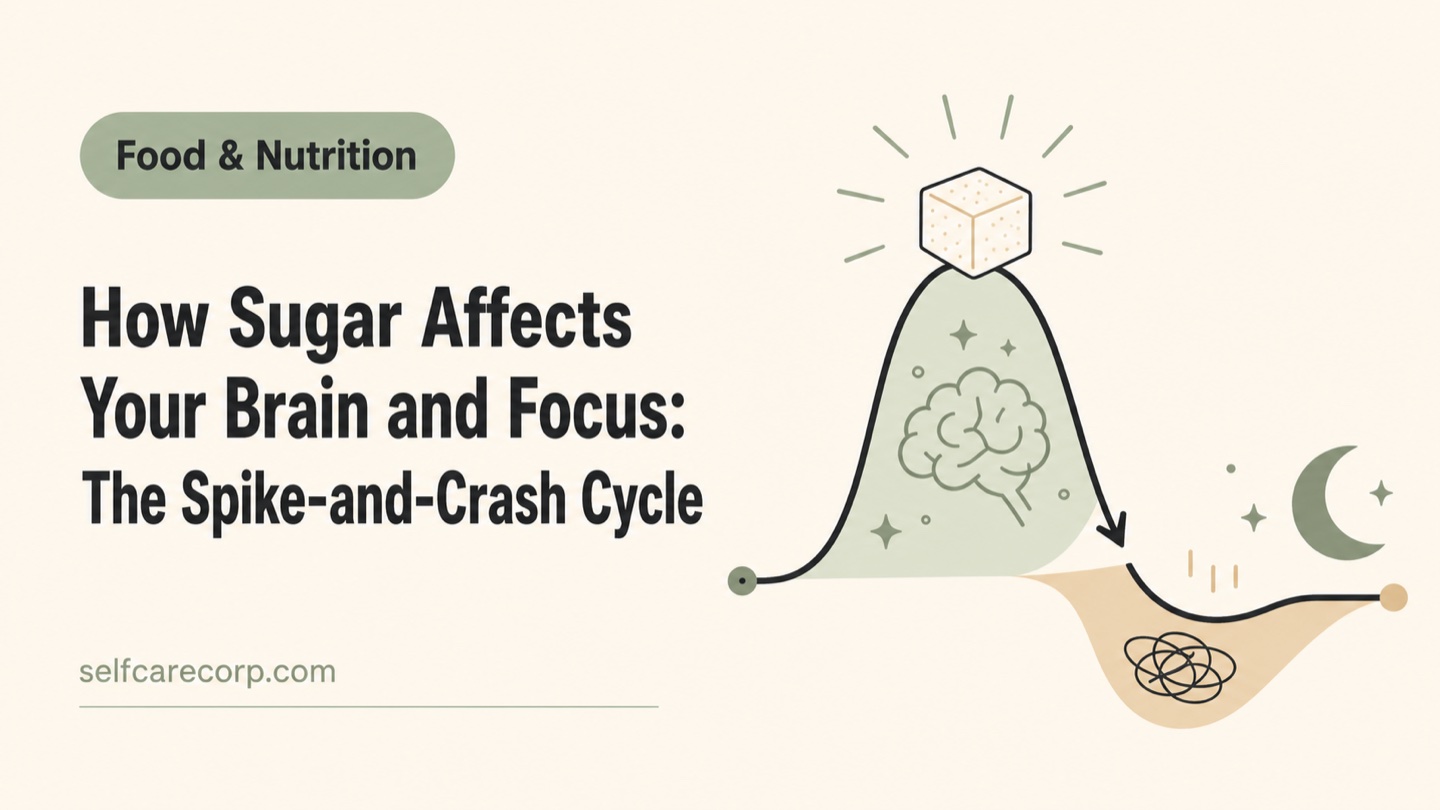
How Sugar Affects Your Brain and Focus: The Spike-and-Crash Cycle
Sugar gives your brain a quick lift, then a crash that dulls focus. Here's how blood sugar swings shape concentration, plus simple swaps to steady your energy.
Table of contents
What sugar does to your brain and focus
Sugar gives your brain a fast hit of fuel and a small lift of dopamine, the brain's feel-good messenger, so for a few minutes you can feel a little sharper. The catch is what follows: a quick rise in blood sugar is usually met by a quick drop, and that dip, more than the sugar itself, is what leaves you foggy and hunting for another snack. Your brain runs almost entirely on glucose, the simple sugar your body pulls from food, so how steadily that fuel arrives has a lot to do with how steady your attention feels. Harvard Medical School describes the brain as dependent on glucose for its main fuel, and researchers estimate it uses close to 20% of the body's energy even though it makes up only about 2% of your weight.
This is a general wellness guide for everyday readers who want steadier energy and a clearer head. It isn't medical advice, and if you're managing diabetes or another blood sugar condition, your care team's guidance comes first.
Why does sugar make it hard to concentrate?
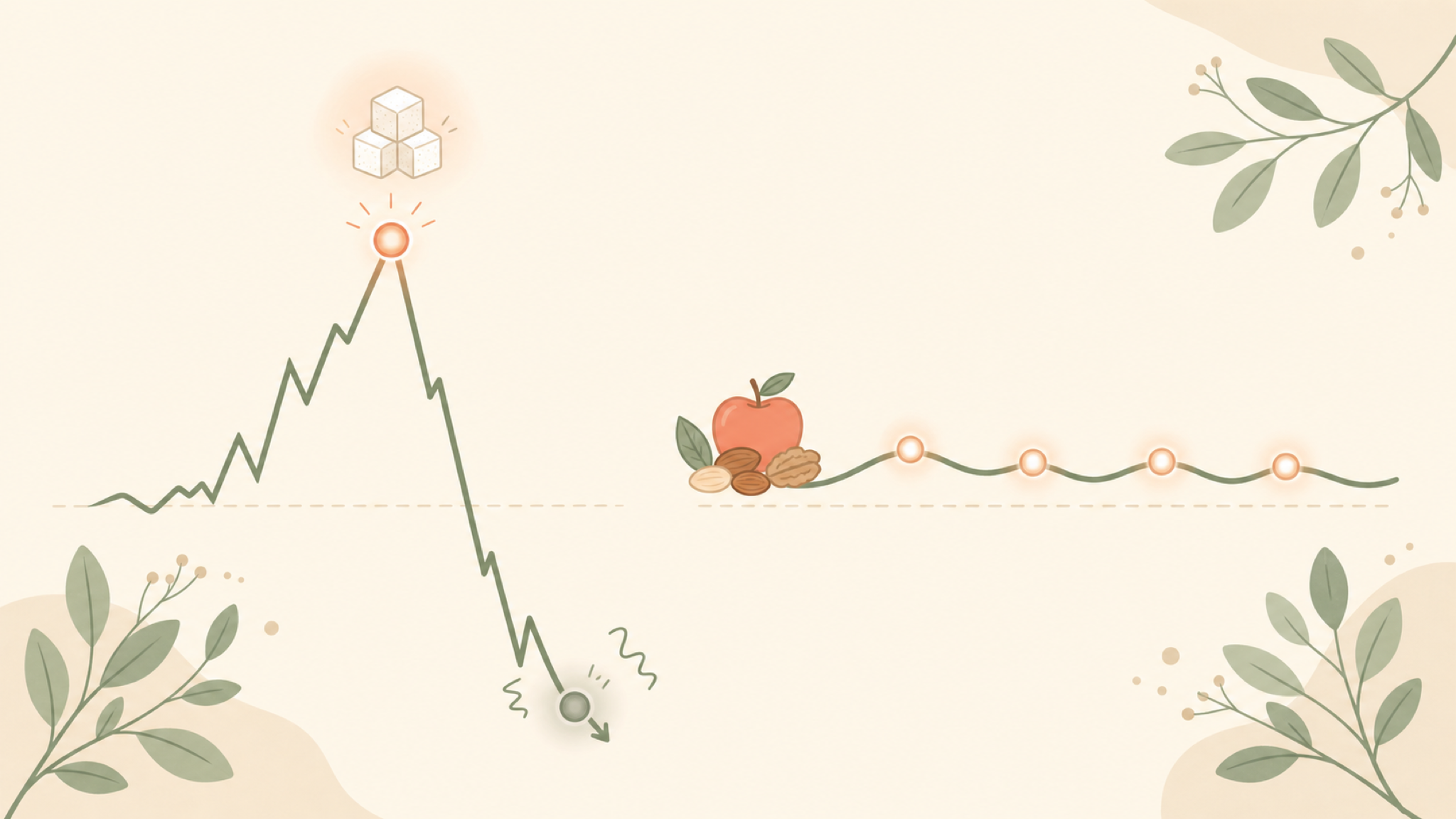
The problem is the swing, not the sweetness. When you eat something sugary on its own, like a soda or candy, the sugar reaches your bloodstream quickly. Your body answers with insulin to move that glucose into your cells, and blood sugar can dip below where it started. That low point is when many people notice the familiar afternoon slump: trouble focusing, a shorter temper, tiredness, and a craving for more sugar to climb back up.
Repeat that a few times a day and your energy turns into a run of peaks and valleys instead of a steady line. The Nutrition Source at the Harvard T.H. Chan School of Public Health points to fiber-rich whole foods and balanced meals as a gentler way to fuel the body, since they slow how fast sugar hits your blood. Steadier fuel tends to feel like steadier focus.
How much added sugar is too much?
The American Heart Association keeps it simple. On its healthy eating pages, the AHA recommends no more than 6 teaspoons (about 25 grams) of added sugar a day for most women and 9 teaspoons (about 36 grams) for most men. It also notes that the average adult in the United States takes in roughly 17 teaspoons a day, well past either limit.
The World Health Organization frames the same idea by calories. The WHO recommends keeping "free sugars," meaning added sugars plus the sugar in honey, syrups, and fruit juice, under 10% of your daily calories, and says dropping below 5% brings extra benefit. Added sugar is the kind worth watching. The natural sugar in a whole orange comes packaged with fiber and water that slow it down, which is why whole fruit and fruit juice don't act the same in your body.
Simple habits that keep your energy level
You don't have to give up sugar to feel the difference. The aim is fewer sharp spikes, and a few everyday swaps get you most of the way there:
- Pair sugar with protein, fat, or fiber. A cookie after a meal lands more gently than one on an empty stomach, and fruit with a few nuts beats fruit alone.
- Start the day savory. A breakfast built on eggs, plain yogurt, or oats holds your focus longer than sweet cereal or a pastry.
- Look at drinks first. Soda, sweetened coffee, and juice raise blood sugar fast because there's no fiber to slow them, so they're the easiest first swap.
- Walk after you eat. A short stroll after a meal helps your muscles burn off some of the glucose and softens the peak.
Here are a few swaps that trade a fast spike for steadier energy:
| Instead of | Try |
|---|---|
| Soda or sweetened juice | Water, sparkling water, or unsweetened tea |
| Sugary cereal or a pastry | Oatmeal, eggs, or plain yogurt with fruit |
| Candy on an empty stomach | Fruit with nuts or a piece of cheese |
If you're trying to build focus on purpose, steady blood sugar sits underneath the kind of deep, absorbed attention behind a flow state. And because food, light, and daily movement all shape how you feel, the ideas in boosting serotonin naturally work right alongside these swaps.
Start with one change this week
Focus isn't only about willpower or the right playlist. It's also about what you feed the organ doing the concentrating. Pick one swap, maybe trading your afternoon soda for sparkling water, and watch how the mid-afternoon slump shifts over a week. Small, steady changes are far easier to keep than a full sugar ban, and they add up to calmer energy and a clearer head.
This article is for general information and self-care education only. It is not medical advice, diagnosis, or treatment. For questions about your health, talk to a qualified healthcare professional.