How to Train Your Brain to Enjoy Difficult Tasks Without Forcing It
Train your brain to handle hard tasks by pairing them with rewards, shrinking the first step, and using if-then plans, backed by behavioral research.
Table of contents
- Can you really train your brain to enjoy hard tasks?
- Why difficult tasks feel bad before you even start
- Pair the hard task with something you enjoy
- Shrink the starting line
- Make follow-through automatic with if-then plans
- Treat effort as a signal, not a warning
- Which technique should you start with?
- A gentle way to practice this week
You can't flip a switch and suddenly love hard work, but you can make difficult tasks feel less unpleasant by changing how you approach them. The most reliable methods are simple: pair the task with something you enjoy, make the first step small enough to actually start, and plan exactly when and where you'll do it. These ideas come from decades of behavioral research, including Wharton professor Katherine Milkman's work on temptation bundling and psychologist Robert Eisenberger's theory of learned industriousness.
This guide is about everyday resistance: the dread before a workout, a sink full of dishes, or an hour of focused work you keep putting off. It isn't about clinical conditions like depression or attention disorders, which deserve support from a qualified professional. The aim here is gentler, which is to lower the friction on ordinary hard tasks so they feel a little easier to begin and a little more rewarding to finish.
Can you really train your brain to enjoy hard tasks?
Not instantly, and not all the way to joy, but you can lower the discomfort until starting feels ordinary instead of dreadful. Robert Eisenberger described the mechanism in his learned industriousness theory, published in the journal Psychological Review in 1992. His research found that when hard effort is reliably followed by a reward, the sensation of working hard slowly picks up some reward value of its own, and effort feels less aversive over time.
That won't turn a tax return into a hobby. What it does is shift your baseline. The more often you push through something hard and feel good afterward, the less your brain flinches the next time. The rest of this guide is about setting up those small wins on purpose rather than waiting for motivation to show up.
Why difficult tasks feel bad before you even start
Often the worst part of a hard task is the moment right before it. Your brain treats the effort ahead as a cost and floods you with resistance, even when the task itself is manageable once you're in it. That gap between dread now and relief later is why I'll do it in a minute can quietly stretch into an afternoon.
It helps to notice that the story in your head before starting is usually louder than the reality. If you tend to circle the same worries, it's worth learning to tell useful reflection apart from rumination, because the spinning rarely makes the task smaller. Naming the dread as a passing feeling, not a verdict on the task, takes some of its power away.
Pair the hard task with something you enjoy
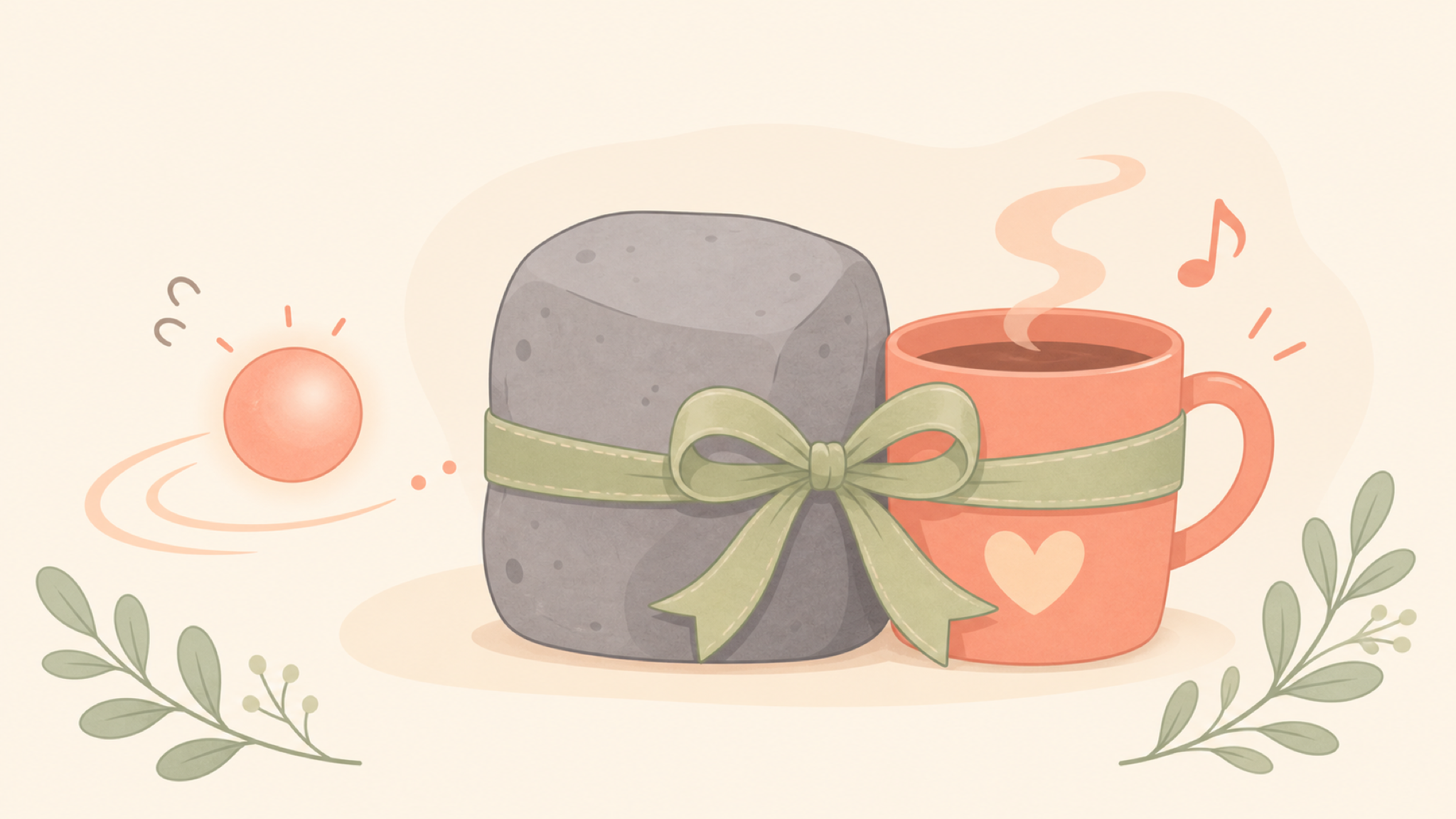
One of the most studied tricks is to bundle a task you avoid with something you look forward to. Katherine Milkman named this temptation bundling in a 2014 study published in Management Science. She let people listen to gripping audiobooks only at the gym, and in her original experiment participants given that setup visited the gym up to 51 percent more often at first.
The effect wasn't magic. It faded over the weeks, especially around the holidays, which is honest and worth remembering. A larger field experiment Milkman co-authored, with roughly 6,800 people, found that encouraging temptation bundling raised the odds of a weekly workout by about 10 to 14 percent. The everyday version is small: save one specific podcast, playlist, or show for the task you dread, and only let yourself have it then.
Shrink the starting line
When a task feels too big to begin, make the first step almost laughably small. Tell yourself you'll wash three dishes, write for five minutes, or walk to the end of the street. The point is to get past the hardest moment, which is the start, because once you're moving, continuing is far easier than beginning.
This works best when you actually break the work into pieces instead of just promising to start. If a project feels like a wall, our guide on breaking big tasks into small steps walks through how to slice it into parts you can pick up without bracing yourself. A five-minute start you finish beats a two-hour plan you never touch.
Make follow-through automatic with if-then plans
Deciding in advance exactly when and where you'll act removes the daily negotiation with yourself. Psychologists call these implementation intentions, or if-then plans, and the format is plain: If it is 6 p.m. and I have cleared dinner, then I will put on my shoes and walk for ten minutes.
The evidence is strong. Peter Gollwitzer and Paschal Sheeran reviewed 94 studies in a 2006 analysis and found that if-then plans had a medium-to-large effect on whether people actually followed through, a Cohen's d of about 0.65 in statistical terms, which roughly means the behavior happens noticeably more often than with a vague goal. Tie the plan to a cue you can't miss, like a set time of day or something you already do without thinking.
Treat effort as a signal, not a warning
How you read the feeling of effort changes how long you stay with it. If strain means I'm just not good at this, you quit. If strain means this is the part where I'm actually learning, you keep going. Carol Dweck, who received the American Psychological Association's Distinguished Scientific Contribution Award, has spent decades showing that people who see ability as something built through effort tend to persist on hard tasks longer than those who see ability as fixed.
You don't have to fake enthusiasm. You just retire the idea that difficulty is a sign you're doing something wrong. A hard workout, a confusing chapter, an awkward first draft: the friction is the work, not a warning to stop.
Which technique should you start with?
Start with the one that matches your biggest sticking point, not all four at once. If you dread a task you repeat often, bundle it. If you can't get going, shrink the start. If you keep forgetting or skipping, write an if-then plan. If you bail the moment it gets hard, work on how you read effort.
| Technique | Best for | One way to start |
|---|---|---|
| Temptation bundling | Tasks you dread but repeat often | Save a favorite podcast for only that task |
| Shrinking the start | Tasks that feel too big to begin | Commit to just five minutes |
| If-then plans | Tasks you forget or keep skipping | Write a plan tied to a time or habit |
| Reframing effort | Tasks you quit when they get hard | Treat the hard part as the point |
A gentle way to practice this week
Pick one task you've been avoiding and one technique from the table. For a week, do just that, with no bigger overhaul. Maybe you save a favorite audiobook for folding laundry, or you write one if-then plan for your morning walk. Small, repeated wins are what teach your brain that effort is survivable and often worth it.
None of this makes hard things easy. It makes them easier to start, and starting is usually most of the battle. Be patient with yourself here. You're not forcing motivation, you're building a friendlier relationship with effort, one ordinary task at a time.
This article is for general information and self-care education only. It is not medical advice, diagnosis, or treatment. For questions about your health, talk to a qualified healthcare professional.