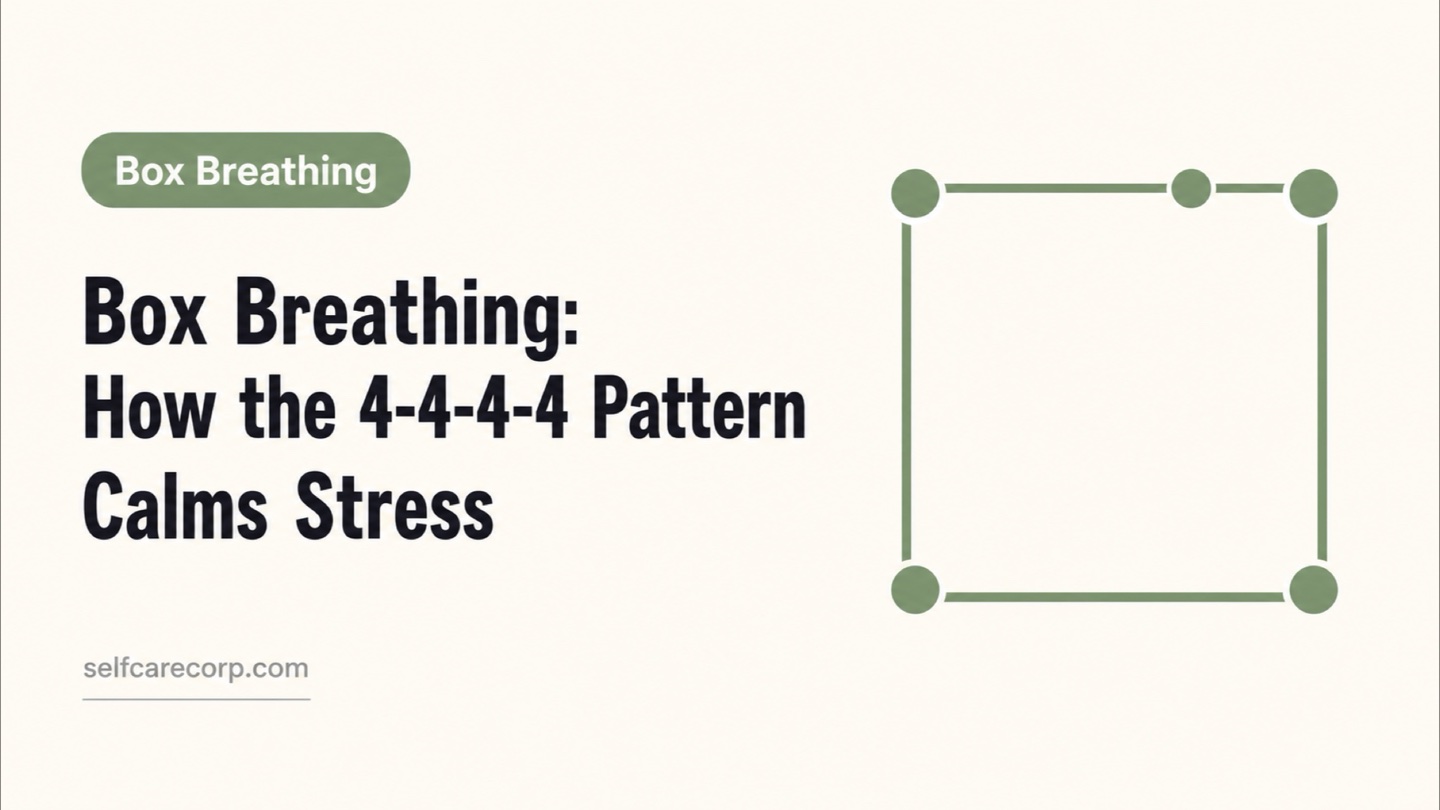
Box Breathing: How the 4-4-4-4 Pattern Calms Stress
Box breathing is a 4-4-4-4 pattern: inhale, hold, exhale, hold. Cleveland Clinic calls it a relaxation tool the Navy SEALs use to steady stress.
Table of contents
Box breathing is a simple way to slow your breath when you feel wound up: breathe in for four seconds, hold for four, breathe out for four, and hold for four, then repeat. One full round takes about 16 seconds, and a few rounds are often enough to feel your shoulders drop. Cleveland Clinic describes it as a relaxation tool used by U.S. Navy SEALs and by anyone who wants to steady themselves in a stressful moment. This guide is about box breathing for everyday calm and easier wind-down before sleep, not a treatment for any medical condition.
What box breathing is
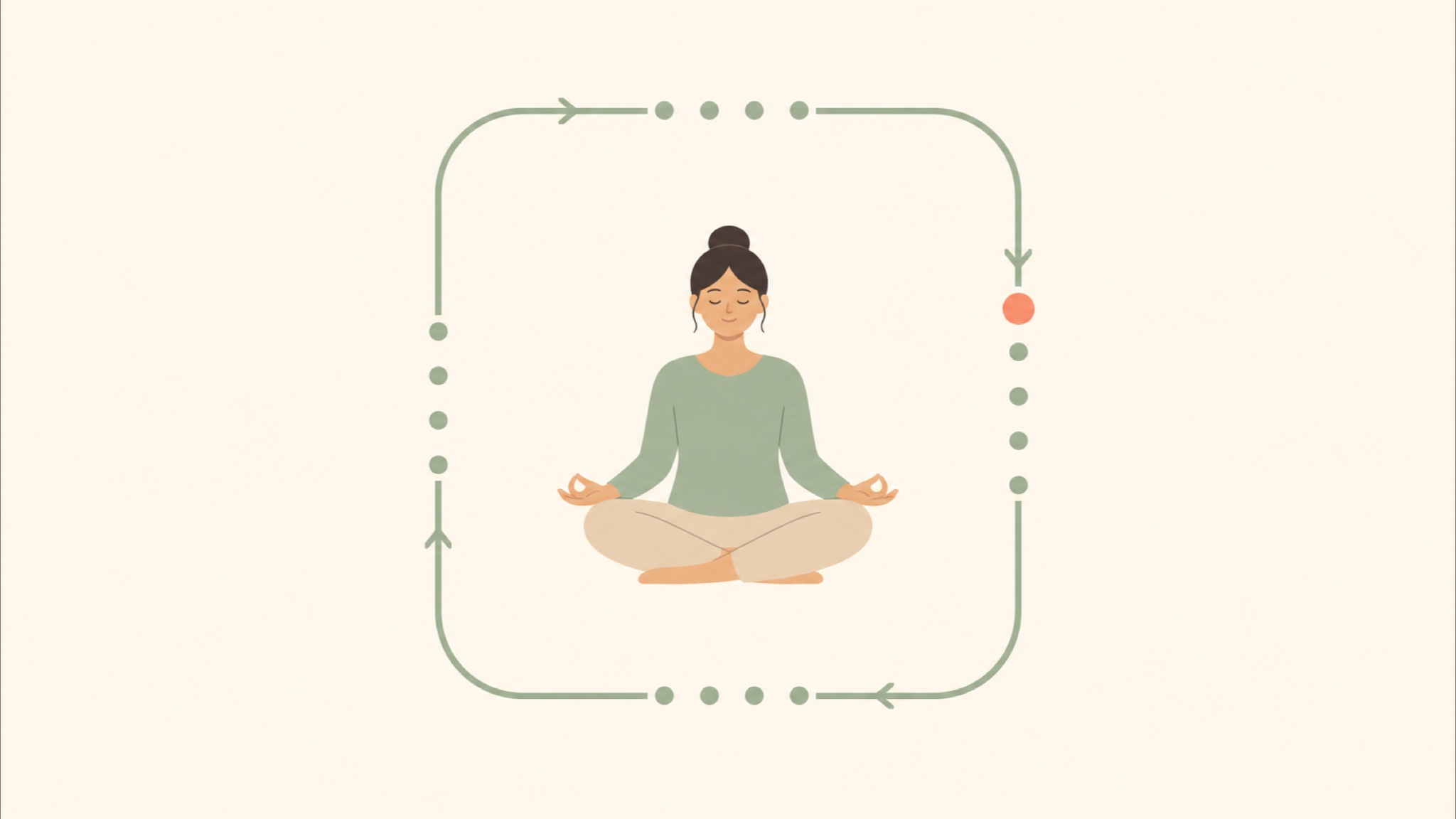
Box breathing is a paced breathing pattern built from four equal steps of four seconds each: inhale, hold, exhale, hold. Because the four parts are the same length, people picture them as the four sides of a square, which is where the name comes from. You will also see it called square breathing.
The method grows out of pranayama, the breath-control practices in yoga, so the core idea has been around for a very long time. What is newer is how widely it gets used for ordinary stress, from waiting rooms to the ten minutes before bed. If you already lean on a simple mindfulness practice, box breathing sits neatly alongside it, because counting your breath gives your attention one small, steady thing to hold onto.
How do you do box breathing?
Sit comfortably, breathe all the way out, then move through the four counts. Here is the full sequence:
- Breathe in slowly through your nose for a count of four.
- Hold your breath for a count of four.
- Breathe out through your mouth for a count of four.
- Hold again for a count of four, then begin the next round.
Cleveland Clinic suggests repeating the cycle for three or four rounds and practicing once or twice a day whether or not you feel stressed, so the pattern feels familiar when you actually need it. If four seconds is a strain, Cleveland Clinic says you can shorten each step to two or three seconds and build up from there. The exact count matters less than keeping every side of the box the same length, and you want to breathe gently rather than gulp a big lungful.
Why does it calm you down?
Slow, even breathing helps move your body out of "fight or flight" mode. Your nervous system has two broad settings: the sympathetic side that revs you up when you sense a threat, and the parasympathetic side, sometimes called "rest and digest," that helps you settle. The parasympathetic system runs largely through the vagus nerve, a long nerve that reaches from the brainstem down through the chest, and a slow exhale is one of the everyday ways to lean on it.
Cleveland Clinic points to relaxation as the main benefit and notes that regulating your breath can lower levels of the stress hormone cortisol and may help lower blood pressure. It helps to be honest about scale, though: this is a calming habit, not a cure. What most people notice is a quieter head and a slower heartbeat within a minute or two, which is often just enough to think more clearly.
How box breathing compares with other simple patterns
Box breathing is one of several paced patterns, and the best one mostly depends on what you are trying to do. The counts below are a common starting point, so adjust them to what feels comfortable for you.
| Pattern | Rough count (seconds) | Often used for |
|---|---|---|
| Box breathing | In 4, hold 4, out 4, hold 4 | Steadying yourself in a stressful moment |
| 4-7-8 breathing | In 4, hold 7, out 8 | Winding down before sleep |
| Longer-exhale breathing | In 4, out 6 | Easy, low-effort calm through the day |
The stretched-out exhale is why Cleveland Clinic frames 4-7-8 as a wind-down technique, so if your aim is falling asleep you might reach for that over the even box pattern. On restless nights, pairing a breathing pattern with small changes that protect your sleep tends to help more than either one alone.
Simple cautions before you start
Box breathing is gentle for most healthy people, but a couple of things are worth keeping in mind. Breathe softly and stay within your comfort; Cleveland Clinic warns against going too fast or too slow, or straining to fill your lungs. If you feel lightheaded, that is a signal to stop the counts and let your breath return to its normal rhythm, and the feeling usually passes quickly.
Breath holds can feel different if you have a heart or lung condition, are pregnant, or tend to get anxious when you focus on your breathing. If any of that sounds like you, check with your doctor before making box breathing a regular habit. And there is no rule that you have to include the holds; a plain slow inhale with a long exhale still calms the body. The point is to feel steadier, so if one version feels stressful, ease off and try a gentler count.
This article is for general information and self-care education only. It is not medical advice, diagnosis, or treatment. For questions about your health, talk to a qualified healthcare professional.