How Slow Breathing Calms Your Nervous System
Slow breathing near six breaths a minute, with a longer exhale, taps the vagus nerve and calms your nervous system. Here's why, and how to try it.
Table of contents
Slow breathing calms your nervous system because it shifts your body out of 'fight or flight' mode and into 'rest and digest.' When you breathe at roughly six breaths a minute, with the exhale a little longer than the inhale, you gently stimulate the vagus nerve, the main nerve of the calming parasympathetic branch of your nervous system, and your heart rate and stress signals settle. The U.S. National Center for Complementary and Integrative Health (NCCIH) calls this shift the 'relaxation response,' which slows the heart rate and lowers blood pressure.
This is a plain-language look at the everyday physiology and how to try it for ordinary stress. It is not medical advice, and it is not a treatment for a diagnosed anxiety or heart condition.
What happens in your body when you breathe slowly?
Slow breathing tips the balance between the two halves of your autonomic nervous system, the part that runs automatically without you thinking about it. The sympathetic branch is your accelerator: under stress it releases hormones, speeds your heart, and quickens your breath. The parasympathetic branch is your brake, and its main cable is the vagus nerve.
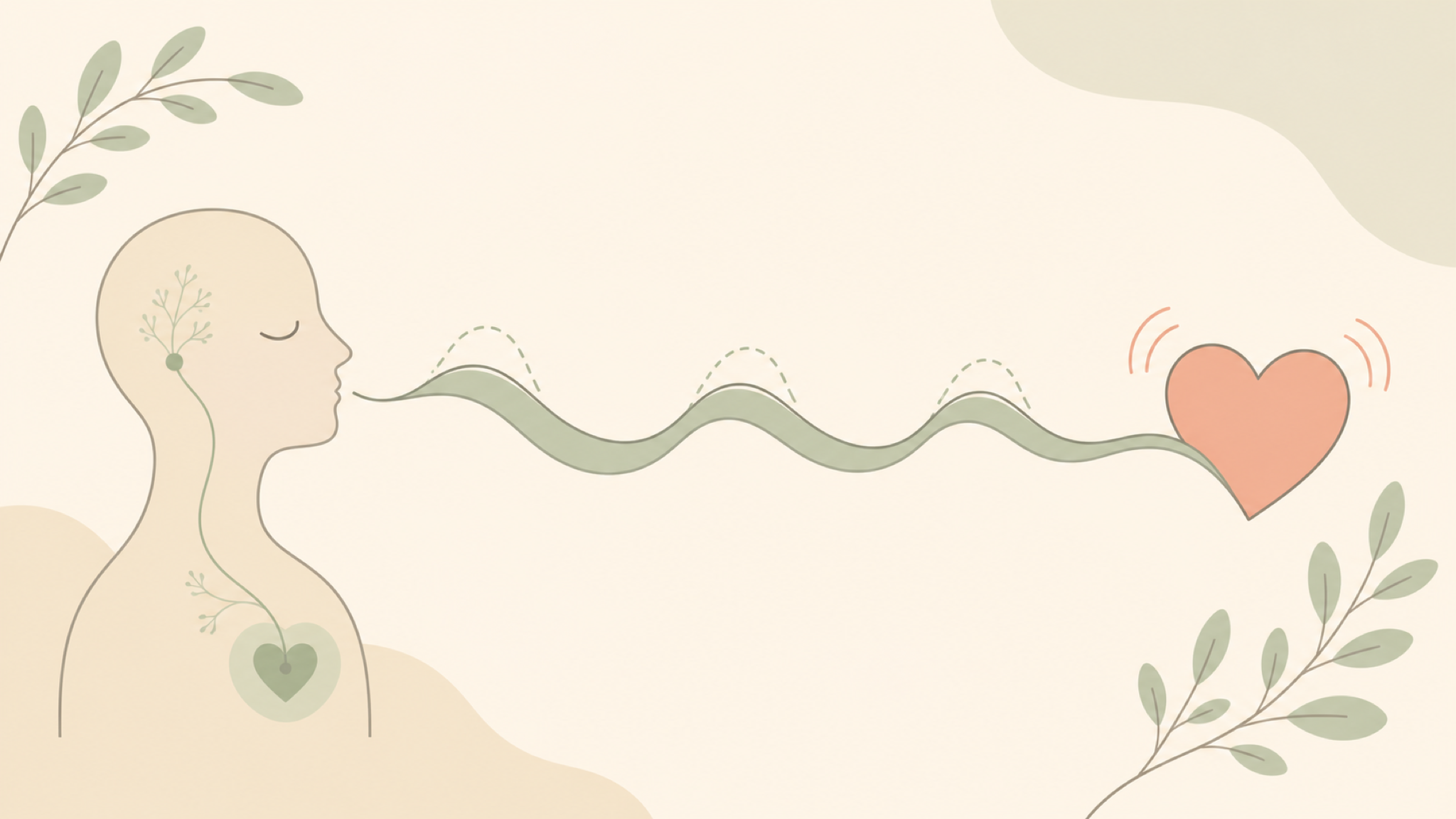
Your heart already speeds up a little each time you inhale and slows each time you exhale. On the exhale, the vagus nerve releases a chemical messenger called acetylcholine at your heart's natural pacemaker, easing the beat. Stretching the exhale lengthens that calming phase, which is why breathing in for a count of four and out for a count of six feels steadier than fast, shallow breathing.
Why does about six breaths a minute work so well?
Six breaths a minute is a sweet spot because it matches a rhythm already running in your circulation. Researchers call this pace the resonance frequency, about 0.1 hertz, or roughly five seconds in and five seconds out. At this speed your breathing lines up with slow waves in your blood pressure and the reflex that regulates it, the baroreflex, and the two rhythms reinforce each other.
That pairing raises heart rate variability, the healthy moment-to-moment variation in the gaps between your heartbeats and a common marker of a relaxed nervous system. You don't need to hit exactly six; anywhere from about five to seven slow breaths a minute works for most people.
A simple slow-breathing pattern to try
Start with a 4-6 rhythm: breathe in gently through your nose for about four seconds, then out for about six. Let your belly rise on the inhale instead of your shoulders, which is the sign the breath is reaching your diaphragm, the dome-shaped muscle that powers a deep breath. Five minutes is a good starting dose, and it helps most as a regular habit rather than a one-time rescue.
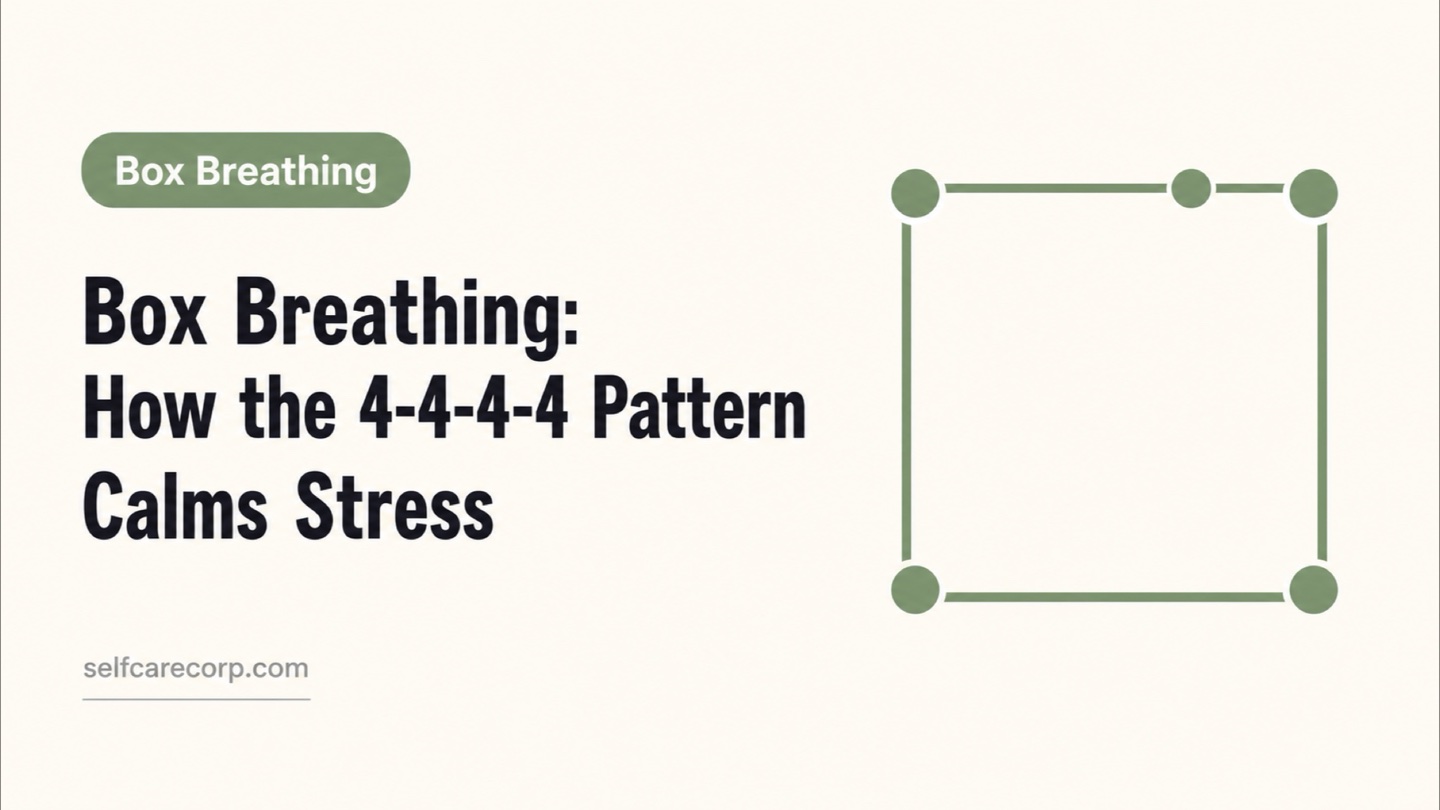
If two different counts feel fiddly, an even five-in, five-out rhythm (sometimes called coherent breathing) lands right around that six-a-minute pace, and the steady 4-4-4-4 box breathing pattern is another easy on-ramp. A 2023 Stanford study of brief daily breathing practices reported that a pattern built around a long, slow exhale did the most to lift mood and calm the body among the methods it compared.
NCCIH notes these techniques are generally safe and tend to help most when practiced regularly alongside good sleep, movement, and support. If you feel lightheaded, just return to your normal breathing, which usually means you slowed or deepened a little too quickly. You can read NCCIH's overview of relaxation techniques at nccih.nih.gov.
This article is for general information and self-care education only. It is not medical advice, diagnosis, or treatment. For questions about your health, talk to a qualified healthcare professional.