Shukatsu: End-of-Life Planning as a Gentle Self-Care Habit
Shukatsu is the Japanese practice of organizing your belongings, wishes, and documents while you're healthy—a calm, practical form of end-of-life self-care.
Table of contents
Shukatsu (終活) is the Japanese practice of preparing for the end of your life while you're still healthy—sorting your belongings, writing down your care and funeral wishes, and organizing documents so your family isn't left guessing. The name is short for "ending activities," and the term traces back to a 2009 article series in the Japanese magazine Weekly Asahi. This guide looks at shukatsu as a gentle self-care and wellbeing habit, a way to feel more settled about the future—not as legal, financial, or medical advice; for wills, taxes, or formal care directives, work with a qualified professional where you live.
What shukatsu actually means
Shukatsu is short for "ending activities," and it covers both the practical and the emotional side of getting ready: deciding what happens to your things, recording your care wishes, and putting paperwork in order so the people you love aren't left with unanswered questions. The 2009 Weekly Asahi series popularized the term, and the idea spread quickly, helped by a wave of books and media coverage in the years that followed.
The name is a small piece of wordplay. In Japanese, "shūkatsu" already meant job hunting—the busy, organized effort students pour into finding work. Swapping a single character reframes preparing for the end of life as that same kind of active, intentional project instead of something to avoid thinking about.
Why does planning for death count as self-care?
Because facing it on your own terms, while you're well, tends to take weight off your shoulders rather than add to it. When your wishes are written down and your affairs are tidy, you stop carrying that low hum of "I really should deal with that someday." You also spare your family the stress of guessing what you would have wanted during an already hard time.
There's a quieter benefit too. Thinking honestly about a limited amount of time has a way of sharpening what matters right now. That's part of why the practice has spread beyond older adults—people in their twenties and thirties have taken it up less as funeral prep and more as a reset, a prompt to notice how they actually want to spend their days. If that resonates, you might like our take on finding more joy in ordinary moments. For many people, questions about mortality also touch on meaning and belief, which we look at in our piece on how spirituality and religion affect mental health.
What goes into an ending note
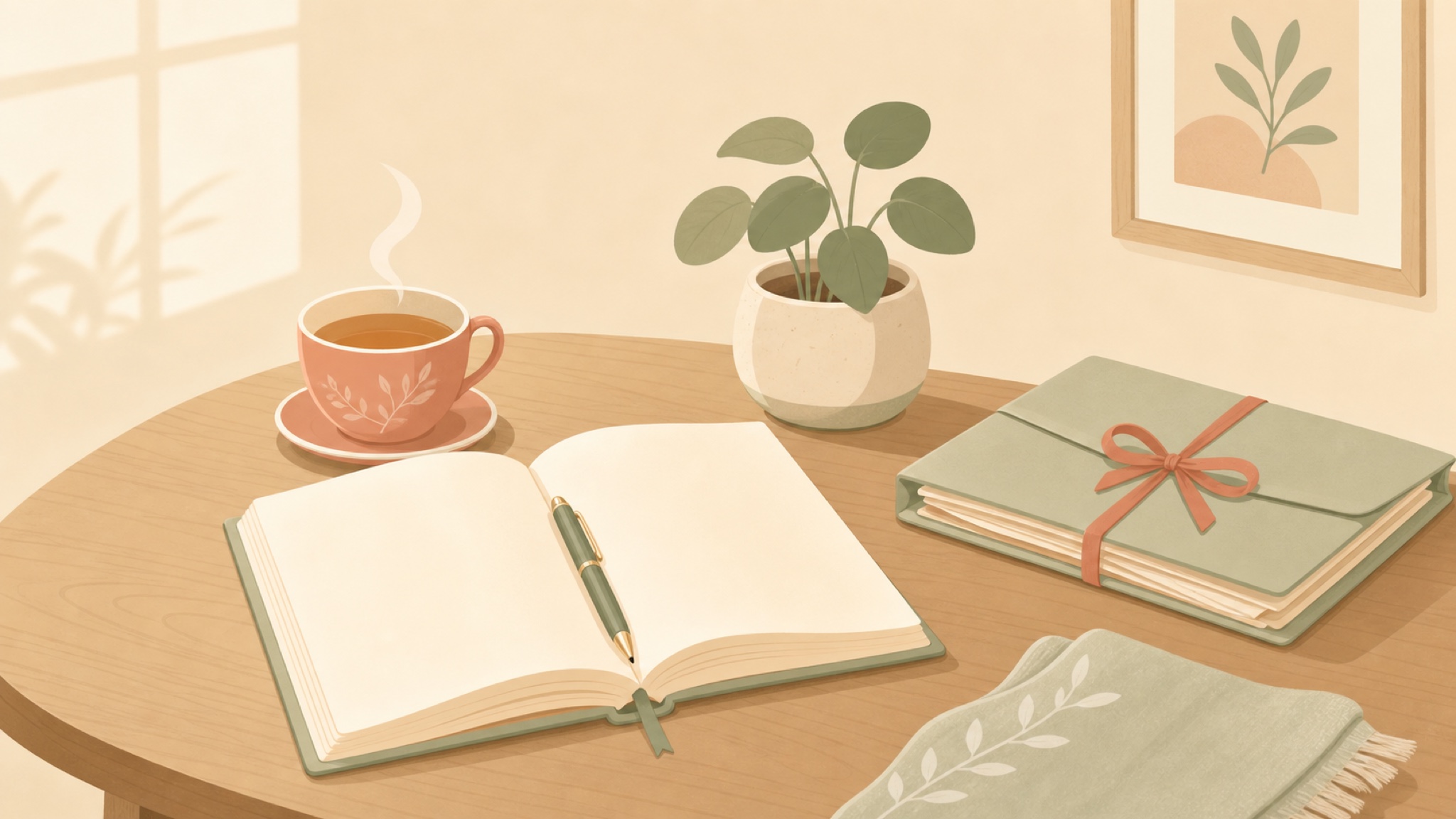
The centerpiece of shukatsu is often an "ending note" (エンディングノート), a plain notebook where you record your wishes and the information your family would need. It isn't a legal will and generally carries no legal force. It's a guide, written in your own words, meant to be easy to find and easy to follow.
People fill theirs out differently, but common sections include:
- Medical and care preferences, so someone knows what you'd want if you couldn't speak for yourself
- A list of financial accounts, insurance, and subscriptions, with where to find the details
- Digital access—email, phone, and online accounts—and what should happen to them
- Wishes for a funeral or memorial, including anything you'd rather keep simple
- Belongings that carry meaning, and who you hope will keep them
- Short messages or letters for specific people
Keep the legally binding parts—a will, inheritance, formal care directives—with a qualified professional in your area. The note works best as the human, plain-language layer that sits alongside those documents.
How do you start without it feeling morbid?
Start with your stuff, not your death. Sorting belongings is the least emotionally loaded entry point, and it gives you a quick, visible win. This is the heart of a related Swedish practice called döstädning, or "death cleaning," popularized by the artist Margareta Magnusson in her 2017 book "The Gentle Art of Swedish Death Cleaning." Her advice is refreshingly light: clear things out gradually, keep what you truly love, and don't leave a lifetime of clutter for someone else to face.
A gentle way in:
- Pick one small, low-emotion category to begin—kitchen drawers, old cables, paperwork you no longer need.
- Set a short timer, say 20 to 30 minutes, so it stays a task and not a marathon.
- Sort into keep, give away, and let go, then move the giveaways out of the house the same week.
- Save the sentimental boxes—photos, letters, keepsakes—for last, once you've built some momentum.
Keeping it a small, repeatable habit
Shukatsu isn't a weekend project you finish once and file away. Bodies, accounts, and relationships change, so the useful version is a light annual check-in—many people tie it to a birthday or the new year. Pull out your ending note, update anything that has shifted, and add anything new. Twenty minutes once a year keeps it current without turning it into a burden.
It also opens the door to conversations that are easy to keep postponing. Telling a partner, sibling, or friend where your note lives, and roughly what's in it, does as much good as the note itself. Handled this way, planning for the end stops being a grim chore and becomes something gentler: a steady, caring act for the people you'll leave it to, and a clearer view of the life you're living now.
This article is for general information and self-care education only. It is not medical advice, diagnosis, or treatment. For questions about your health, talk to a qualified healthcare professional.