NYC Legionnaires' Outbreak: Upper East Side Facts and Staying Calm
The NYC Legionnaires' cluster on the Upper East Side spreads through cooling-tower mist, not tap water or people. Know the signs and stay calm.
Table of contents
As of mid-July 2026, the New York City Health Department is investigating a cluster of Legionnaires' disease on Manhattan's Upper East Side, in the Carnegie Hill and Yorkville neighborhoods. The most reassuring fact first: you cannot catch it from your tap water, your shower, or a sick neighbor. The health department has said the bacteria spread through mist from building cooling towers, not from person to person and not through home plumbing. If you live, work, or spent time in the affected ZIP codes since late June and you develop flu-like symptoms, the guidance is to contact a health care provider promptly.
This is a plain-language guide to understanding the outbreak and taking care of yourself around it. It is not a diagnosis or a replacement for your own doctor, and it does not cover treatment specifics.
What's happening on the Upper East Side
Legionnaires' disease is a serious form of pneumonia, which is an infection deep in the lungs. It comes from a germ called Legionella that lives in water. According to the NYC Health Department, this investigation began on July 2, 2026, after two cases turned up close together, and it later widened to include a third ZIP code, 10075. By mid-July, according to the NYC Department of Health as reported by CNN, the community cluster had grown to 67 confirmed cases, with 12 people hospitalized and one death; dozens of earlier patients had already been discharged. Health Commissioner Dr. Alister Martin is leading the city's response. These figures describe a developing situation as of mid-July 2026, so they may keep shifting as the investigation continues.
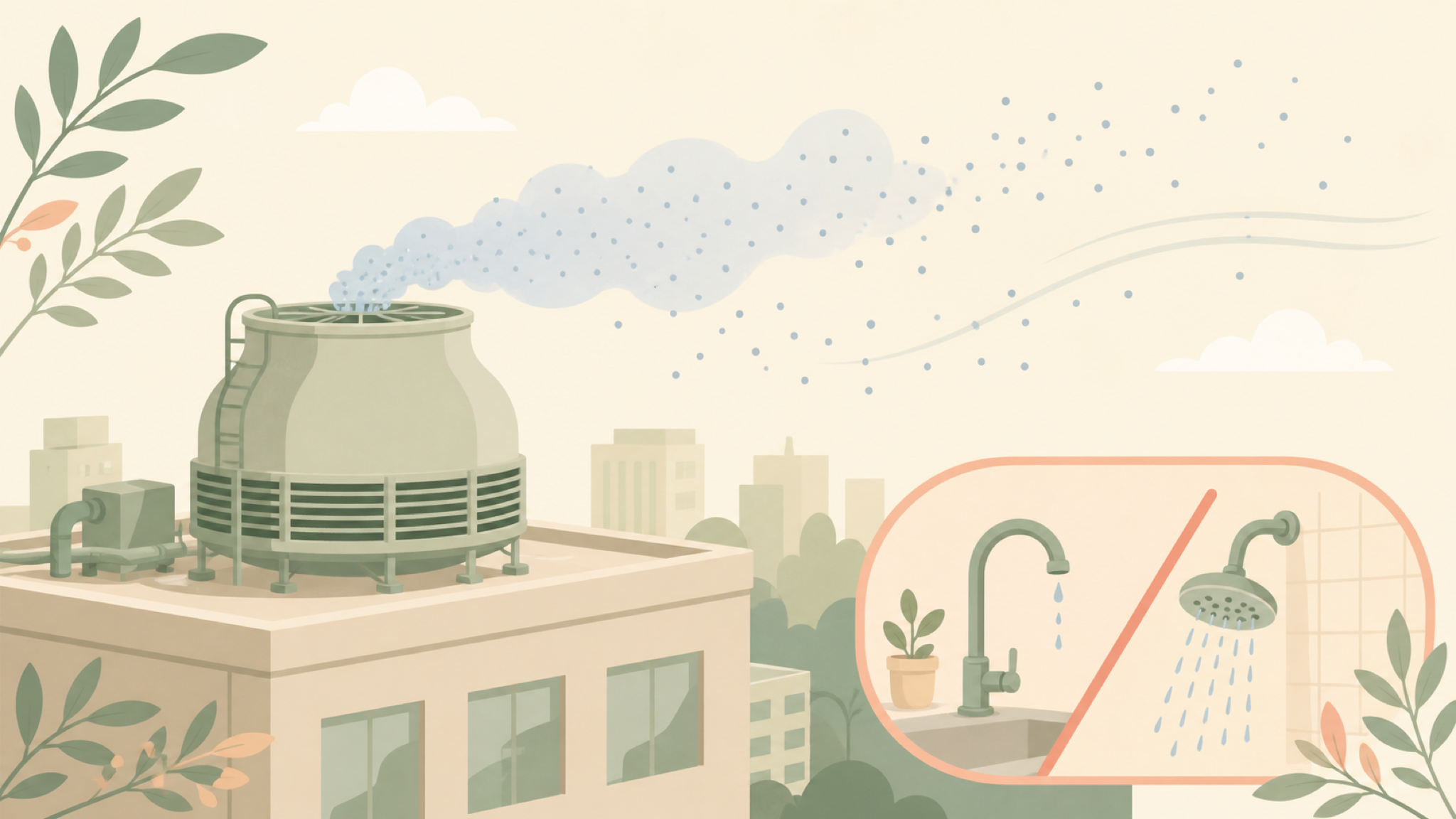
The focus is on cooling towers. A cooling tower is a piece of rooftop building equipment that uses water to shed heat from large air-conditioning systems, and it releases warm water vapor into the outdoor air. People can get sick if they breathe in that mist and it happens to carry the bacteria. According to the NYC Health Department, Legionella turned up in the cooling towers of 76 Upper East Side buildings, and owners were ordered to drain, clean, and disinfect the equipment right away; the city later said all of those owners confirmed the work was complete. The affected buildings included residential co-ops and condos as well as some public places. You can read the department's plain-language overview on its Legionnaires' disease page, and the CDC's Legionella resource explains how the bacteria behave in water systems.
The response has moved quickly in part because of recent history. As CNN has reported, a Legionnaires' cluster in Harlem the year before hospitalized 92 people and led to seven deaths, which pushed New York to pass a law in May requiring more frequent cooling-tower inspections and higher fines for owners who fall out of compliance. The CDC notes that about 1 in 10 people who develop Legionnaires' disease die from it, a risk that drops when treatment starts early — one more reason the guidance keeps circling back to reaching out to a provider promptly if you feel unwell.
Can I catch it from my shower or a sick neighbor?
No. According to the NYC Health Department, you cannot get Legionnaires' disease from drinking tap water, cooking, showering, bathing, or running your home air conditioner, and it does not pass from person to person — Legionnaires' disease is not contagious. The outbreak is not a problem with any building's drinking-water plumbing. It comes from mist drifting out of rooftop cooling towers into the neighborhood air.
That difference is worth holding onto, because outbreak headlines can make everyday habits feel dangerous when they are not. If you live in the affected ZIP codes (10028, 10128, and 10075), the water at your kitchen sink and in your bathroom is not the concern here, and normal daily life can continue.
What symptoms should I watch for, and when should I reach out?
Call a health care provider if you come down with flu-like symptoms after spending time in the affected area since late June. The CDC lists the common signs of Legionnaires' disease as cough, shortness of breath, fever, muscle aches, and headache; some people also get nausea, vomiting, or diarrhea. These usually start 2 to 14 days after exposure, so the timing can feel disconnected from any single day you were in the neighborhood, and new cases can still surface even after the towers have been cleaned. If you recently spent time in the affected ZIP codes (10128, 10028, and 10075), it is worth keeping an eye on how you feel and reaching out to a doctor if something comes on — caught early, Legionnaires' disease is very manageable with antibiotics.
Some people tend to get sicker than others. Public health agencies point to a few higher-risk groups:
- Adults over 50
- People who smoke or vape
- People with weakened immune systems
- People living with ongoing conditions such as diabetes or heart, kidney, liver, or lung disease
There is no vaccine for it. The NYC Health Department has said Legionnaires' disease is treated with antibiotics and that most people recover well when treatment starts early. Trust your read on your own body: if breathing feels hard or a fever keeps climbing, that is a reason to call rather than wait and see.
Steadying yourself when a local outbreak is in the news
A neighborhood health scare can spike anxiety even when your own risk is low, and that stress deserves care of its own. A few small habits help. Pick one or two sources you trust, such as the health department's updates, and check them at set times, maybe once in the morning and once in the evening, rather than refreshing the news all day. A constant stream of updates rarely changes what you need to do, and it keeps your body on alert.
Hold on to the ordinary anchors of your day: regular meals, some movement, and a steady sleep schedule. A short walk of 10 to 15 minutes outdoors can interrupt a loop of worried thoughts, and saying the fear out loud to someone you trust often cuts it down to size. If outbreak coverage tends to rattle you, the calm-first approach in our guide to staying grounded during an Ebola scare carries over here, even though the illness is different.
Gentle care if you or someone you love is recovering
If a friend or family member is recovering from a lung infection, the most useful thing you can do is back the plan their provider gave them, not swap in your own. In practice that means finishing the full course of any prescribed antibiotics, resting more than seems necessary, and drinking enough fluids. Recovery from pneumonia can stretch on for weeks, and tiredness often lingers after the worst has passed, so there is no prize for rushing back to a packed schedule.
Small comforts go a long way: a quiet room, easy meals, and permission to do less. For the water fixtures inside your own home, like showerheads and humidifiers, a little routine upkeep is a sensible year-round habit, and our notes on simple home water habits that lower your risk walk through it. Those steps are about general household care and stay separate from this cooling-tower outbreak, which the city is managing at the building level.
Staying calm and staying informed can go together. Learn the real signs, remember that your tap and your neighbors are not the danger, and give yourself the same steady care you would offer a friend.
This article is for general information and self-care education only. It is not medical advice, diagnosis, or treatment. For questions about your health, talk to a qualified healthcare professional.