How to Break Big Tasks Into Small Steps Without the Overwhelm
Break a big task into small steps: name what 'done' looks like, list the pieces, then shrink the first step until it takes two minutes to start.
Table of contents
To break a big task into small steps, name the finished result first, then list every piece it would take to get there, and shrink the very first piece until it feels almost too easy to skip. You begin with that one small step, not the whole mountain. Why this works is less about time and more about feeling: psychologist Fuschia Sirois, speaking on an American Psychological Association podcast, frames the struggle to start as an emotion problem rather than a scheduling one, and a small step is something your mind can actually begin.
This is a plain, practical guide for anyone who freezes in front of a big to-do, whether that's a full inbox, a move, a work project, or a messy home. It isn't medical advice, and it won't fix every kind of stuck, but it gives you a repeatable way to get moving without bracing for the whole thing at once.
Why does a big task feel so heavy?
A big task feels heavy because its size sets off uncomfortable feelings, not because you're lazy or behind. In her American Psychological Association podcast conversation, Fuschia Sirois describes procrastination as an emotion-regulation problem rather than a time-management one: what we avoid is the stress, worry, or self-doubt a task stirs up, not the task itself. You can hear the full conversation on the American Psychological Association's site.
That reframe matters for self-care. If the problem were only your calendar, a better planner would fix it. When the real weight is emotional, the kinder and more effective move is to make the task smaller so it stops setting off alarm bells. Breaking a large job into small steps lowers the overwhelm and lets you focus on one thing at a time, which is the relief a crowded mind needs.
How to break a big task into small steps
Get specific about what "done" looks like, then work backward. A simple order to follow:
- Name the finish line. Write one sentence describing the task as finished, like "the spare room is clear enough to walk through."
- Empty your head onto paper. List every action you can think of, in any order. Getting it out of your mind and onto a page is its own relief.
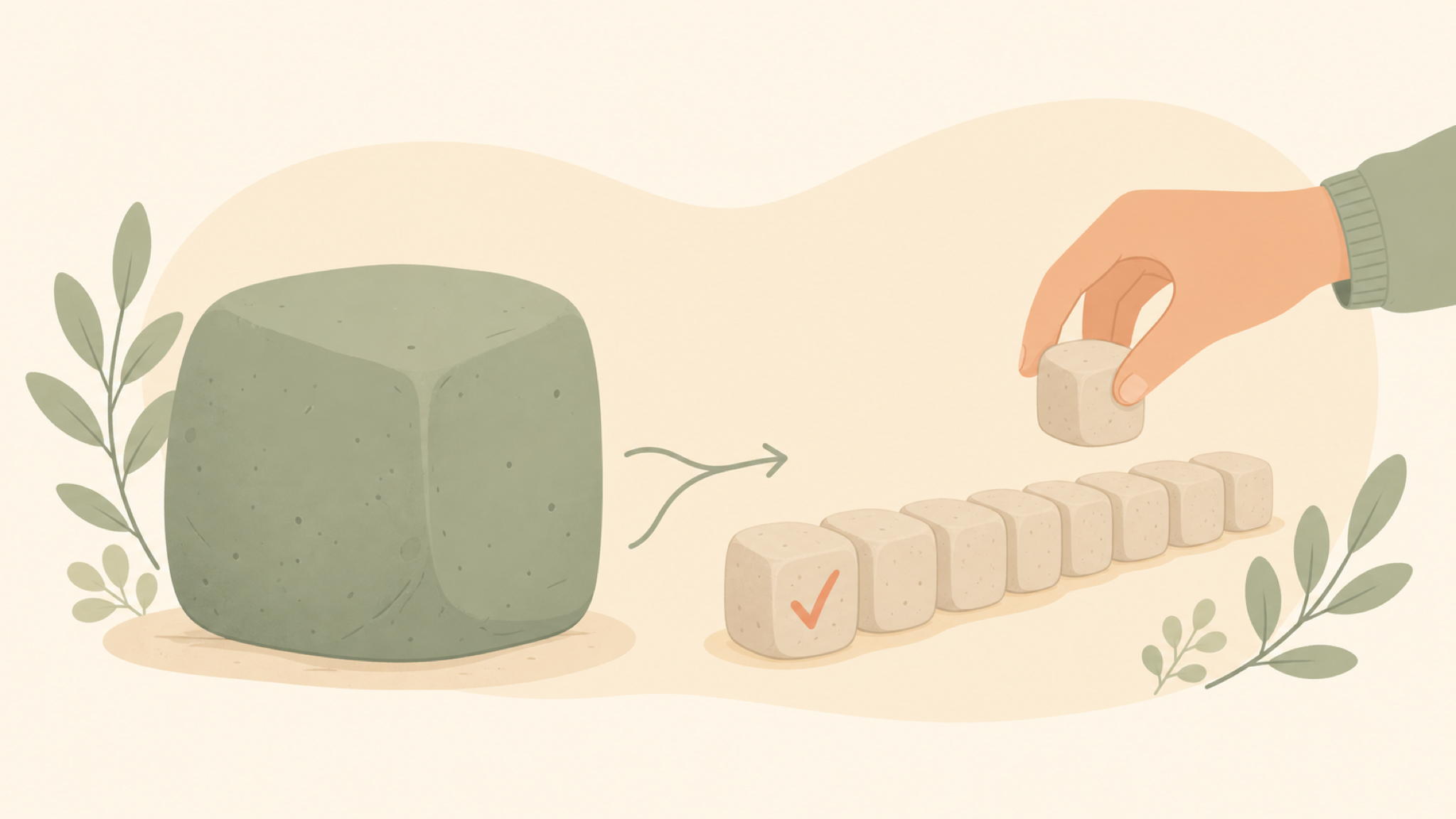
- Cut each item down to a single action. "Sort the garage" is a project. "Put the loose tools in one box" is a step.
- Pick the first step, then shrink it again. If it still feels heavy, it's too big. Make it smaller until you can't easily talk yourself out of it.
A worked example: instead of "clean the whole house," your first step might be "clear one kitchen counter." That's small enough to finish in a few minutes, and finishing it gives you a real, if quiet, sense of progress. This start-small approach carries into other habits, too: it's the backbone of building a daily writing habit and of easing back into reading.
How small should the first step be?
Small enough that starting takes less effort than avoiding it, often something you can do in two to five minutes. The point of a tiny first step isn't the step itself but the shift from stalled to moving. Sirois points to a pattern where we predict a task will feel worse than it actually does, so getting started usually feels better than we expect.
Be gentle with yourself when you slip, because harsh self-talk backfires. Sirois has noted that people who forgive themselves for putting something off tend to procrastinate less the next time, not more. So if last week's plan fell apart, skip the guilt and choose one small step for today.
Keeping momentum without burning out
Do one or two steps, then let yourself stop. You don't have to chain twenty actions in a row to be doing it right. After a step, take a breath, stretch, get a glass of water, and check whether you actually want to keep going. Real progress on a big task usually comes from many short sessions, not one heroic sprint that leaves you flat the next day.
Mark the small wins as they happen. Crossing off "one counter cleared" isn't silly; it's the feedback that tells your mind this is working. String enough small, finished steps together and the task that once felt impossible is quietly, mostly, done.
This article is for general information and self-care education only. It is not medical advice, diagnosis, or treatment. For questions about your health, talk to a qualified healthcare professional.