Dark Empath Signs: Patterns to Notice in Relationships
A dark empath reads emotions well but uses it for personal gain. Learn the signs to notice, what research found, and how to protect your wellbeing.
Table of contents
What exactly is a dark empath?
A dark empath is someone who understands your feelings clearly but tends to use that understanding for their own benefit instead of your comfort. Psychologist Nadja Heym and her colleagues at Nottingham Trent University introduced the term in a 2021 paper in the journal Personality and Individual Differences, after they surveyed nearly 1,000 people and noticed a group who scored high on cold, self-serving traits while still reading emotions accurately. This is a plain-language look at relationship patterns, not a clinical diagnosis or a label to pin on anyone.
Those self-serving traits are what psychologists call the "dark triad": narcissism, an inflated sense of importance and entitlement; Machiavellianism, a calculating and manipulative way of handling people; and psychopathy, meaning emotional coldness and little remorse. Writing for The Conversation, Heym and her co-authors described four groups in their data: typical people with average traits (about 34%), warm empaths who were low on dark traits (about 33%), a traditional dark triad group high on dark traits and low on empathy (about 13%), and dark empaths who scored high on dark traits yet stayed above average on empathy (about 20%).
Two kinds of empathy, and why the split matters
To make sense of the term, it helps to know that empathy comes in more than one form. Researchers usually separate cognitive empathy from affective empathy, and a dark empath's edge lives mostly in the first.
| Aspect | Cognitive empathy | Affective empathy |
|---|---|---|
| What it is | Reading and predicting what someone feels or thinks | Actually feeling some of what the other person feels |
| Everyday example | Noticing a comment stung even though you smiled | Your throat tightens when a friend starts to cry |
| How it tends to be used | To help others, or to influence them | Usually pulls us toward kindness and care |
Here is the part that surprised even the researchers: dark empaths were not simply cold. Heym's team reported that this group scored above average on both cognitive and affective empathy. The empathy sat right next to the darker traits rather than softening them. So the picture is less "a person with no feelings" and more someone who can read and feel you, and still chooses to put themselves first.
Signs people tend to notice
No single moment makes someone a dark empath, and everyone has an off day. What people describe is a pattern that repeats over weeks and months. A few of the common threads:
- Warm, attentive, almost uncannily understanding at the start, then slowly more critical once you are close.
- Things you shared in trust come back later as leverage in an argument.
- Guilt used as a lever, where "after everything I've done for you" appears whenever you set a limit.
- Sharp jokes aimed at you, followed by "I'm only teasing" if you flinch.
- Quiet freeze-outs, or being left off the list when they are annoyed.
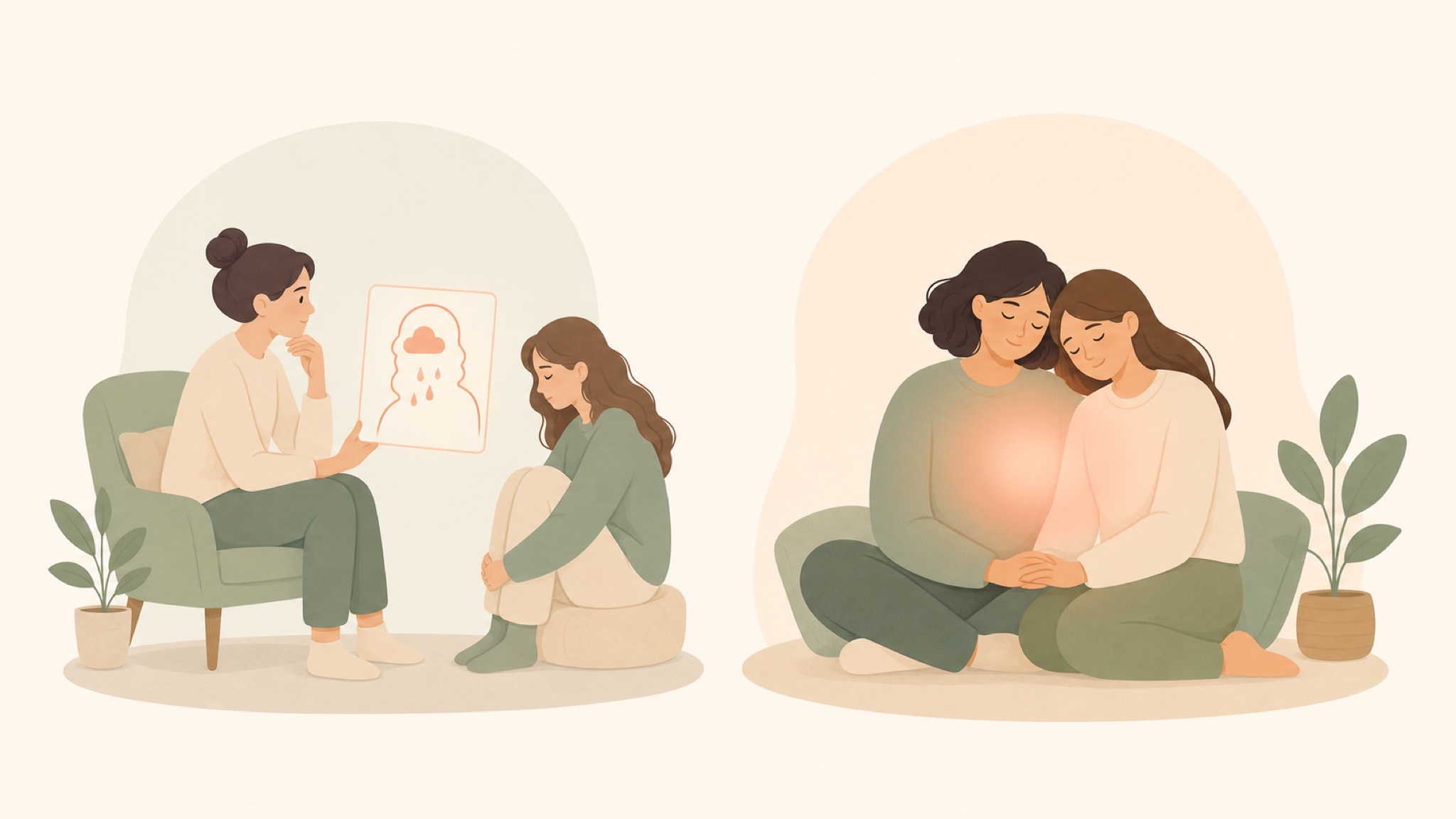
- They understand your feelings well, yet you often walk away feeling unseen or drained.
Some of this lines up with what the study measured. Heym's team found that dark empaths leaned toward indirect aggression, such as social exclusion, malicious humor, and guilt-induction, more than most people, even while they showed less open hostility than the traditional dark triad group. If several of these threads feel familiar in one relationship, it can help to read about the wider patterns of emotional immaturity in a partner too.
Why are dark empaths harder to spot?
Because the empathy and social skill work like camouflage. The researchers pointed out that a dark empath's warmth and ability to read a room make their more callous side harder to see, which is exactly what can keep you second-guessing yourself. Heym's team also reported that this group scored higher on extroversion and slightly higher on neuroticism, so they often come across as outgoing and engaging rather than obviously cold.
This is why the quiet gut feeling so many people mention matters. You may not be able to point to one dramatic incident, and still notice you feel smaller, more anxious, or more careful around this person than you do anywhere else.
Protecting your own peace
You do not need a diagnosis to take care of yourself. The point is not to label someone, it is to notice patterns and protect your wellbeing. A few practical steps:
- Watch patterns over time. One tense evening is normal; a repeating cycle over several weeks is the signal worth trusting.
- Pace what you share. There is no rush to hand over your deepest history to someone you just met.
- Treat that drained, on-edge feeling as information rather than something to argue yourself out of.
- Set one small, clear boundary and watch the response. Someone who respects you will adjust, and a pattern of pushback tells you something too.
- Keep your own support network close, so you are not relying on a single relationship for reality checks.
When your body is wound up after a hard conversation, gentle regulation helps you think more clearly. Something as ordinary as slowing your breathing to calm your nervous system can steady you enough to decide what you actually want to do next.
A note before you use the label
"Dark empath" is a useful idea, not a clinical diagnosis. It does not appear in the DSM-5, the manual clinicians use, and one research paper is a starting point rather than the final word. Hold the term lightly. Let it help you name a pattern and look after your own energy, and leave any real mental-health assessment to a qualified professional. If a relationship consistently leaves you anxious or unsafe, that alone is reason enough to reach out for support.
This article is for general information and self-care education only. It is not medical advice, diagnosis, or treatment. For questions about your health, talk to a qualified healthcare professional.