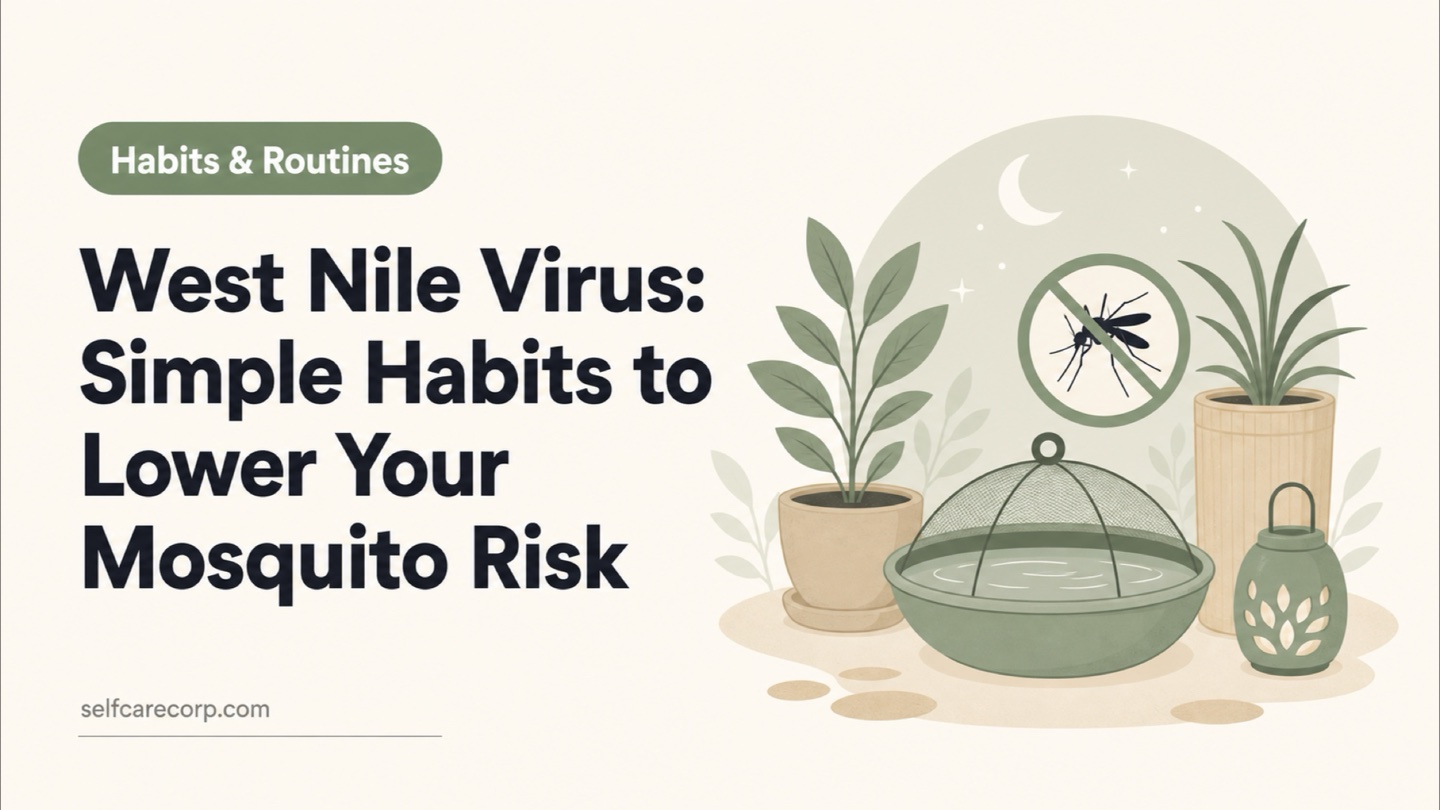
West Nile Virus: Simple Habits to Lower Your Mosquito Risk
West Nile virus spreads through mosquito bites. Simple, CDC-backed habits — clearing standing water and using EPA-registered repellent — lower your risk.
Table of contents
West Nile virus spreads mainly through the bite of an infected mosquito, and there is no vaccine for people — so everyday prevention comes down to two simple habits: avoiding bites and clearing the standing water where mosquitoes breed. The Centers for Disease Control and Prevention (CDC), the U.S. public health agency, says most people who get infected never feel sick, and about one in five develop a fever with symptoms like headache, body aches, or a rash. As of July 2026, we are in the summer-to-fall stretch when the CDC says most U.S. cases turn up, which is exactly when these habits earn their keep.
This is a plain-language self-care guide to the small habits that lower your mosquito risk at home. It is not medical advice, and not a substitute for talking with a healthcare provider about your own health.
How does West Nile virus actually spread?
Through the bite of an infected mosquito — that is the main way. According to the CDC's West Nile virus page, the virus circulates between mosquitoes and birds, and a mosquito can pass it to you when it bites. The mosquitoes that carry it most often are Culex species (a common type of house mosquito), and they tend to be most active from dusk to dawn.
A few details make prevention easier to picture. Only female mosquitoes bite, because they need a blood meal to produce eggs, and they lay those eggs on standing water — even a bottle-cap's worth is enough. The CDC says symptoms, when they do appear, usually start within about two weeks of a bite. You cannot catch West Nile from casual contact with another person, so the whole game is about bites and breeding water.
Clear the standing water around your home
The single most useful habit is a weekly walk-around to tip out standing water. Mosquitoes only need a small, still puddle to lay eggs, so the goal is to leave nothing sitting for more than a few days.
- Empty and scrub flowerpot saucers, buckets, pet water dishes, and anything that quietly collects rain.
- Refresh the water in bird baths and outdoor pet bowls often — many local mosquito-control districts suggest at least every three days.
- Tip over kiddie pools, wheelbarrows, and buckets when you are not using them, and pull sagging water off tarps and pool covers.
- Clear clogged gutters and downspouts so rainwater drains instead of pooling.
If you have read our look at simple home water habits that lower your risk of Legionnaires' disease, this is the outdoor cousin of the same idea: still water is the thing to keep an eye on.
Protect yourself when you are outside
When you head out — especially around dusk and dawn — the CDC recommends using an insect repellent registered with the Environmental Protection Agency (EPA), the U.S. agency that reviews these products. Used as directed, the CDC says on its West Nile prevention guidance that EPA-registered repellents are safe and effective, including for people who are pregnant or breastfeeding.
Any of these active ingredients counts as EPA-registered, so you can look for one on the label:
- DEET
- Picaridin
- IR3535
- Oil of lemon eucalyptus (OLE)
- Para-menthane-diol (PMD)
- 2-undecanone
A couple more habits from the same CDC guidance: wear long, loose-fitting shirts and pants so it is harder for mosquitoes to reach your skin, and use screens on windows and doors — or air conditioning, if you have it — to keep them outside while you sleep.
Should you be worried? How to stay calm
For most people, the odds of getting seriously ill are low — and that is worth holding onto. The CDC says fewer than 1 in 100 people who are infected develop a severe illness affecting the brain or nervous system, and most never notice anything at all. That does not mean ignoring it; it means pointing your energy at the handful of habits above instead of at the headlines.
A calm plan beats a worried one. Do your weekly water walk-around, keep repellent by the door, and dress for dusk — then let the rest go. The CDC notes that a high fever, a severe headache, or a stiff neck after mosquito season is a reason to check in with a healthcare provider, who can decide what is needed. The same steady, low-drama approach we suggested for staying calm during an outbreak works here too: control what you can, and do not let a summer virus run your summer.
Fold it into your week
None of this has to take over your life. Pick one evening — trash night works well — to walk the yard and empty anything holding water, keep a bottle of repellent somewhere you will actually see it, and slip on long sleeves when you sit outside at dusk. Small, repeatable steps like these are the heart of self-care: quiet habits that protect you without asking for much in return.
This article is for general information and self-care education only. It is not medical advice, diagnosis, or treatment. For questions about your health, talk to a qualified healthcare professional.