What Goes in an Aperol Spritz? Ingredients and a Lighter Pour
An Aperol Spritz is Prosecco, Aperol, and soda in a 3-2-1 ratio with an orange slice. Here's what each part is, plus lighter, lower-alcohol ways to sip it.
Table of contents
An Aperol Spritz is made from just three things plus a garnish: Prosecco, Aperol, and a splash of soda water, poured over plenty of ice and finished with an orange slice. Aperol's official recipe sets the balance with a 3-2-1 rule — three parts Prosecco, two parts Aperol, one part soda — and the International Bartenders Association (IBA) recognizes that same ratio as the standard. This guide walks through what each ingredient is and how the drink comes together, then looks at where a spritz fits if you're trying to drink mindfully. It's a general wellness overview rather than medical advice, and figures like Aperol's alcohol strength reflect what the maker lists as of July 2026.
What actually goes in an Aperol Spritz?
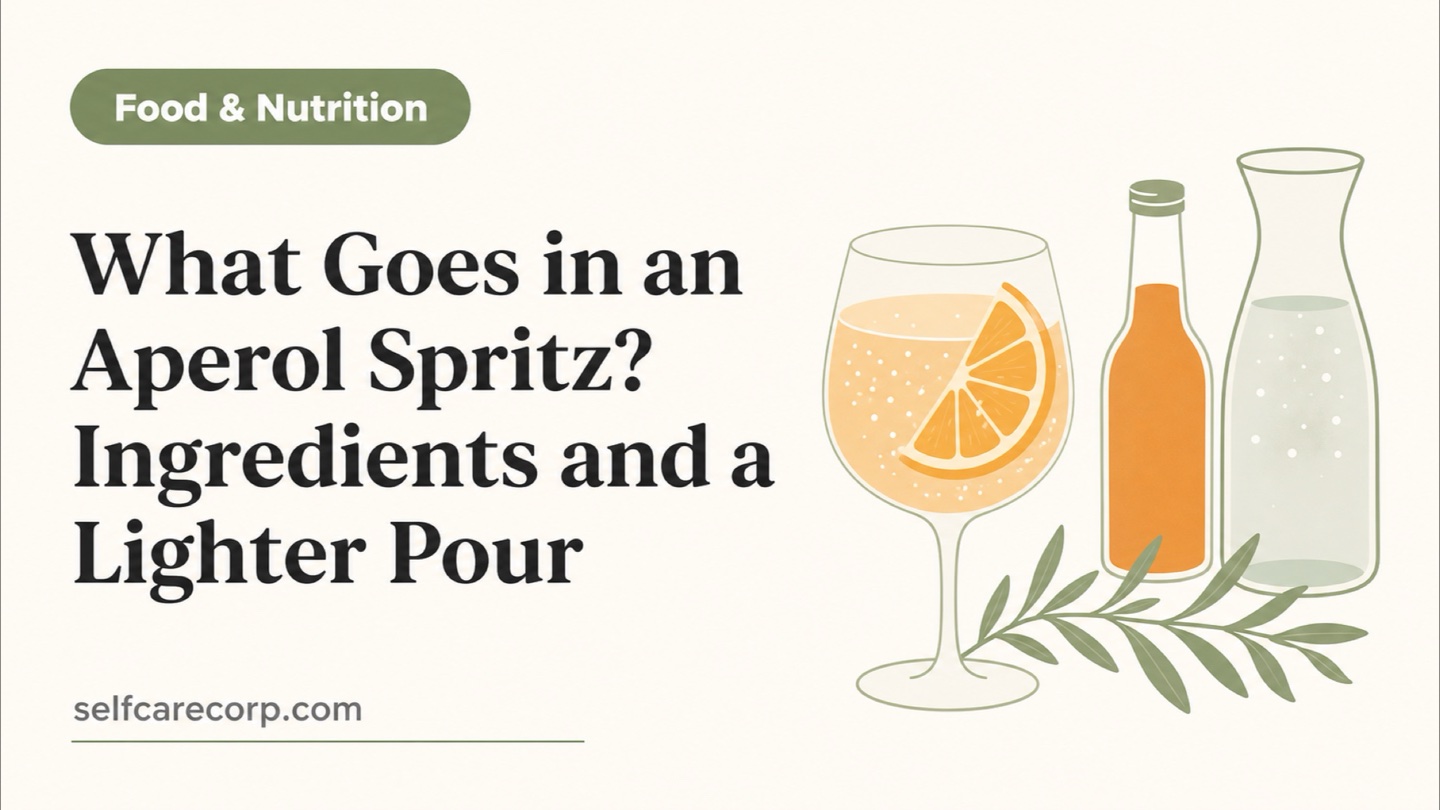
The short answer is three ingredients plus a garnish: Prosecco, Aperol, and soda water, over ice, with an orange slice. Aperol's official recipe builds the drink on a 3-2-1 rule — three parts Prosecco, two parts Aperol, and one part soda water — and the IBA lists that same ratio as the standard.
Here's what each part brings:
- Prosecco is a dry Italian sparkling wine. It's the largest pour and gives the spritz its fizz and light body.
- Aperol is an orange-colored Italian apéritif with a bittersweet citrus flavor. It supplies the signature color and the gentle bitter edge.
- Soda water lengthens the drink and keeps it from tasting heavy or syrupy.
- An orange slice is the classic garnish, adding aroma more than flavor.
The classic 3-2-1 build, step by step
The 3-2-1 ratio scales to any glass. For a single serving, Aperol's official recipe lists roughly 90 ml (3 oz) Prosecco, 60 ml (2 oz) Aperol, and 30 ml (1 oz) soda water, served in a large wine glass.
| Ingredient | Parts | Single pour |
|---|---|---|
| Prosecco | 3 | 90 ml (3 oz) |
| Aperol | 2 | 60 ml (2 oz) |
| Soda water | 1 | 30 ml (1 oz) |
The order you pour in matters more than it looks. Aperol recommends this sequence:
- Fill a large wine glass generously with ice.
- Pour in the chilled Prosecco first.
- Add the Aperol.
- Top with a splash of soda water.
- Garnish with a fresh orange slice.
Pouring the Prosecco before the Aperol keeps the denser Aperol from sinking to the bottom, where it would need heavy stirring to mix in — and all that stirring flattens the bubbles.
What is Aperol on its own?
Aperol is an Italian bitter apéritif: a lightly bitter, orange-colored liqueur meant to be sipped before a meal to wake up the appetite. According to Campari Group, which has produced Aperol since the brand joined its portfolio in 2003, the apéritif carries 11% alcohol by volume (ABV) as of July 2026. That sits well below most spirits, which usually run around 40% ABV.
Its flavor comes from a blend that includes bitter orange, gentian, rhubarb, and cinchona bark, though Campari Group keeps the full recipe secret. Aperol is also sweeter than its better-known cousin Campari, because it contains added sugar — a detail worth remembering if you're paying attention to how sweet drinks fit into your day.
How a spritz fits into mindful drinking
An Aperol Spritz is a real alcoholic drink, so it helps to count it like one. The National Institute on Alcohol Abuse and Alcoholism (NIAAA) defines a U.S. standard drink as any drink with about 14 grams of pure alcohol — the amount in 5 ounces of 12% wine or a 1.5-ounce shot of 80-proof spirits. A typical 3-2-1 spritz lands close to that, in the neighborhood of one standard drink.
The Dietary Guidelines for Americans describe moderate drinking as up to one drink a day for women and up to two a day for men, on days when alcohol is consumed. If you choose to drink, a few small habits keep a spritz feeling like a treat: sip it slowly, keep a glass of water next to it, and have it with food.
Calories are harder to pin to one number, because a spritz isn't a standardized pour and published estimates vary. Most of them come from the Prosecco and from the sugar in Aperol, so a lighter build — more soda, less Aperol — is also a lighter drink.
Lighter and alcohol-free variations
To lighten a spritz without losing its character, shift the ratio toward the soda. A splash of Aperol over a tall glass of soda water and ice, with an orange slice, gives you the color and the bitter-citrus note with much less alcohol and sugar than the full pour.
If you'd rather skip the alcohol entirely, several non-alcoholic apéritifs are built to copy that bittersweet orange profile, and a simple homemade version — sparkling water, fresh orange, and a dash of non-alcoholic bitters — gets you most of the way there. Reaching for a zero-proof option now and then is the same idea behind choosing an alcohol-free beer when you want the ritual without the buzz. The goal isn't to give anything up. It's to keep the version that fits how you want to feel tomorrow.
This article is for general information and self-care education only. It is not medical advice, diagnosis, or treatment. For questions about your health, talk to a qualified healthcare professional.