Hojicha: What It Is, Its Low Caffeine, and an Easy Latte
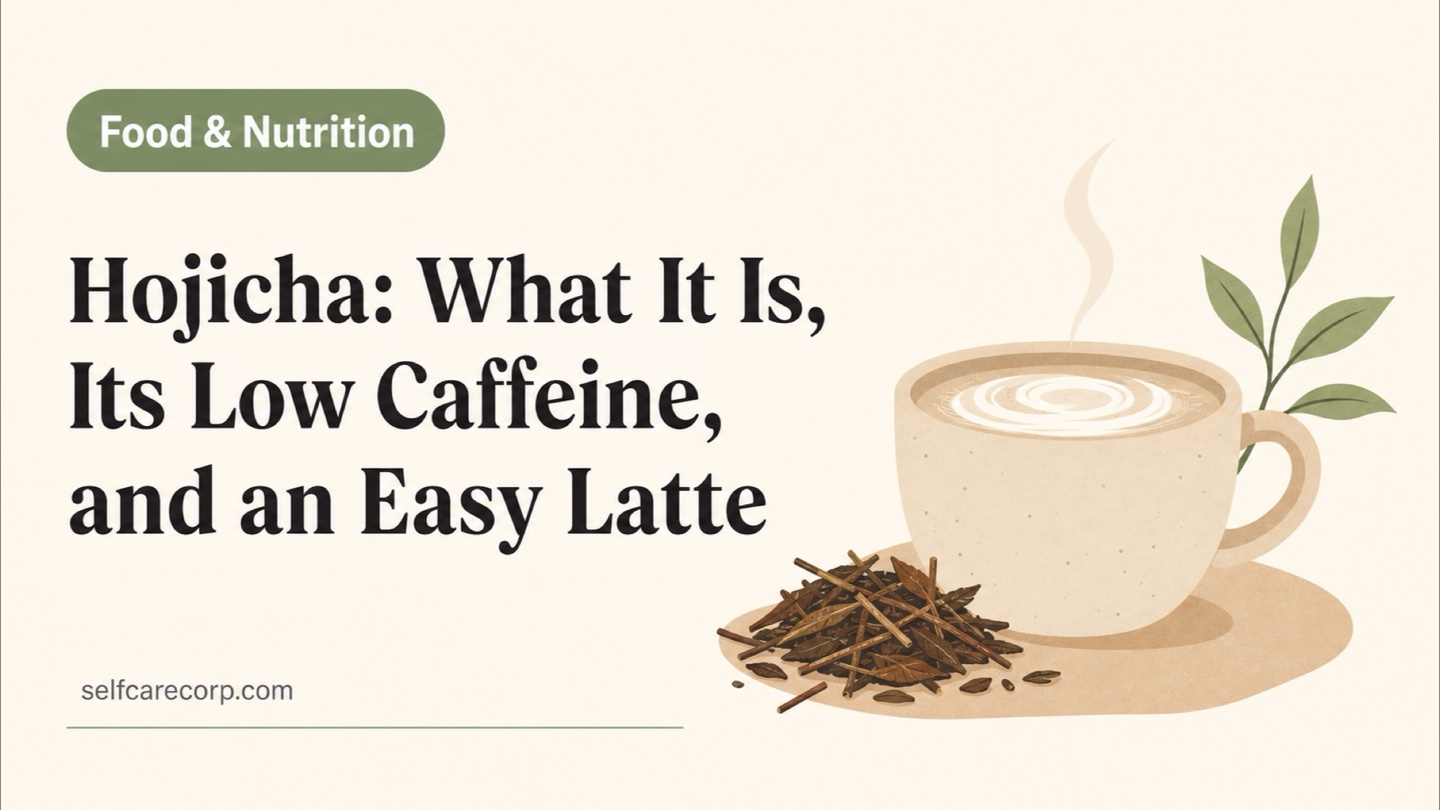
Hojicha is roasted Japanese green tea; the name means 'roasted tea.' It is low in caffeine, and you can make an easy latte at home in minutes.
Table of contents
Hojicha is a Japanese green tea that is roasted instead of steamed, and its name means, quite literally, "roasted tea." The roasting turns the leaves reddish-brown and leaves the tea toasty and nutty with very little caffeine, which is why many people reach for it in the afternoon or evening. Wikipedia's entry on hōjicha traces the method to Kyoto in 1920. This guide keeps things plain: what the word means, how much caffeine is in a cup, and how to make a hojicha latte at home. It is about the drink and the calm little ritual around it, not medical advice.
What does hojicha mean?
The word hojicha joins the Japanese for "roast" and "tea," so it translates directly to roasted tea. It begins as ordinary green tea, usually bancha, the everyday leaves from later harvests, and it often includes the stems and twigs sold on their own as kukicha. Those leaves are then roasted until they turn brown, which is the step that sets hojicha apart from the steamed green teas most of us grew up seeing.
According to Wikipedia's entry on hōjicha, the leaves are roasted at around 150°C (302°F), which stops oxidation and gives the tea its light golden-brown color. The same entry dates the technique to 1920 in Kyoto, where a tea merchant roasted a batch of bancha he could not sell and stumbled onto a new flavor. That roasting sets off the same Maillard browning that makes coffee and toast smell good, producing aroma compounds called pyrazines. The result tastes toasty and gently sweet, closer to roasted chestnuts than to grassy green tea, with almost none of the bitterness people brace for.
How much caffeine is in hojicha?
Less than most other teas. That is the short answer, and it is the reason hojicha works so well later in the day. High-heat roasting breaks down some of the caffeine in the leaf, and hojicha is usually made from mature leaves and stems, which start out lower in caffeine than the young leaves used for sencha or matcha.
Exact figures depend on the leaf and how long you steep it, so treat the numbers below as rough ranges commonly cited by tea guides rather than fixed values.
| Drink | Approx. caffeine per 8 oz (240 ml) cup |
|---|---|
| Hojicha | 7–20 mg |
| Sencha green tea | 25–45 mg |
| Matcha (about 2 g) | 50–70 mg |
| Drip coffee | 95–120 mg |
Because a cup carries so little caffeine, an afternoon or after-dinner hojicha is far less likely to sit between you and sleep than a second coffee would. If you are already trying to protect your evenings, the way you might after reading how a clock change can throw off your rest, hojicha is an easy thing to keep on the shelf.
How to make a hojicha latte at home
A hojicha latte is roasted tea, made strong, with warm milk poured over it. You can start from powder or from loose leaf, and both take only a few minutes.
With hojicha powder
- Sift about 1 teaspoon of hojicha powder into a cup to break up any lumps.
- Add roughly 60 ml (about 1/4 cup) of hot water at around 80°C (175°F) and whisk until smooth. Skip boiling water, since it pulls a burnt, bitter taste out of the tea.
- Warm and froth about 180 ml (roughly 3/4 cup) of milk and pour it in. Oat milk and whole milk both hold their own against the roasted flavor.
- Sweeten to taste if you like. A little honey or maple syrup suits the toasty notes.
With loose leaf or a tea bag
- Steep hojicha in hot water a bit stronger and longer than you would for drinking it plain, then strain out the leaves.
- Pour in warm frothed milk at roughly a one-to-one ratio and adjust from there.
Making hojicha a small self-care ritual
Part of what makes hojicha nice is the pause it builds in. Measuring the tea, waiting for the water to cool a little, whisking or steeping, then wrapping your hands around a warm cup gives you a few unhurried minutes that are hard to rush through. Like other teas from the same plant, hojicha carries the amino acid L-theanine and plant compounds called catechins, and the roasting adds that browned, toasty aroma so many people find comforting.
It also fits the kind of gentle swap that makes an evening feel quieter. If you are trading down from a late coffee, or weighing other low-key options the way some people try an alcohol-free beer in place of a nightcap, a warm hojicha is an easy one to keep in rotation. There is no single right way to drink it. The point is that it is warm, low in caffeine, and yours to slow down with.
This article is for general information and self-care education only. It is not medical advice, diagnosis, or treatment. For questions about your health, talk to a qualified healthcare professional.