Intermittent Fasting for Beginners: How to Choose a Method and Ease In
A plain-language guide to intermittent fasting for beginners: what the 16:8 and 5:2 methods mean, how to ease in, and who should check with a doctor first.
Table of contents
- What intermittent fasting really means
- How the fasting window is supposed to work
- The three methods beginners hear about most
- Which method should a beginner start with?
- A gentle first week
- What to eat and drink during your window
- Is intermittent fasting safe for everyone?
- How to tell whether it is working for you
What intermittent fasting really means
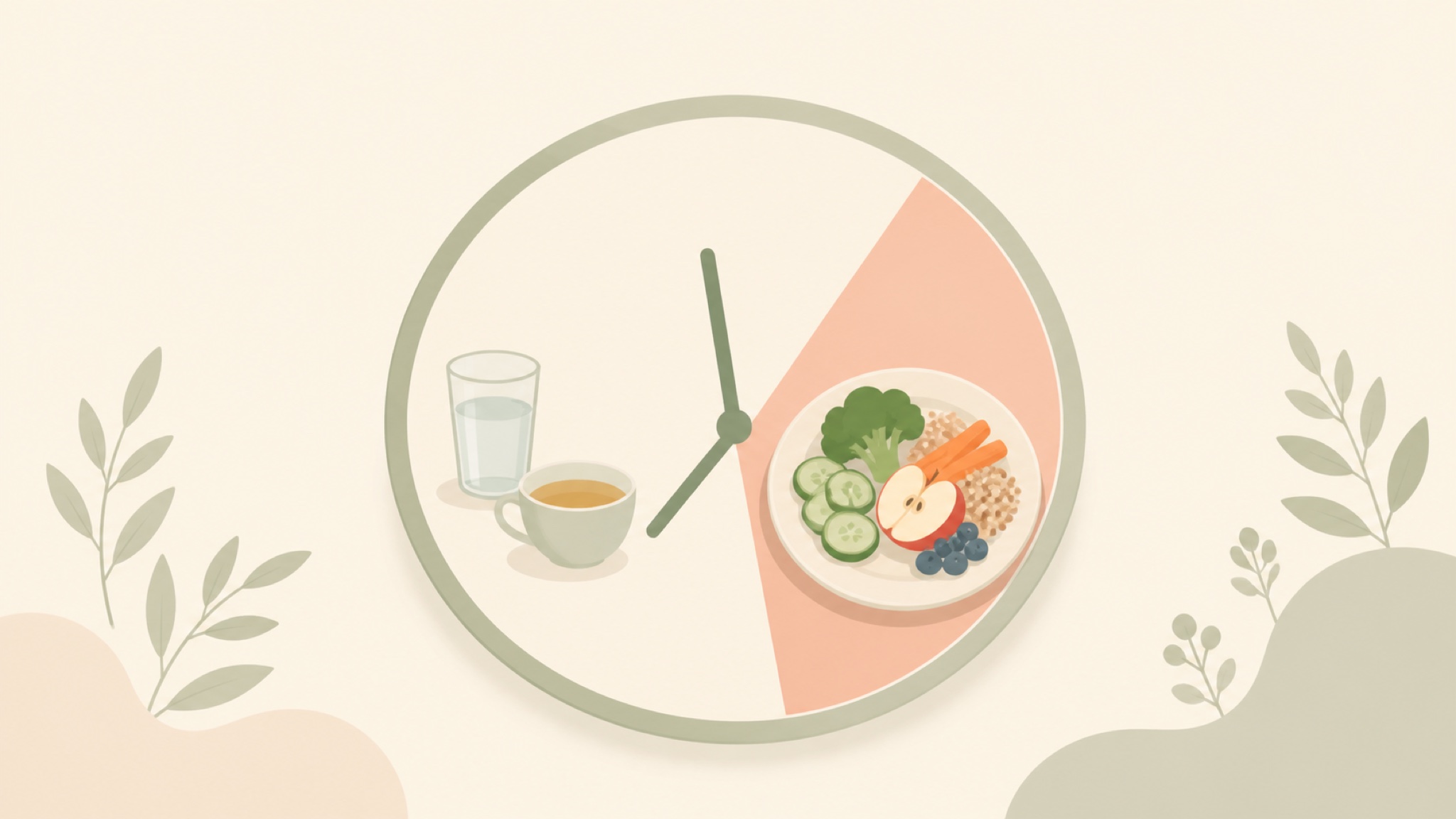
Intermittent fasting is an eating pattern that cycles between set windows of eating and not eating, rather than a rule about which foods you can have. For most beginners the simplest starting point is the 16:8 method: you eat during an 8-hour window and skip food for the other 16 hours, usually by pushing your first meal to late morning or noon. One honest caveat up front: fasting is not right for everyone, and Johns Hopkins Medicine recommends talking with your doctor before you begin.
This guide is written for healthy adults who are curious about trying intermittent fasting for general wellness and steady, gradual change. It does not cover fasting as a treatment for any medical condition, and it is not medical advice. If you are managing a health condition, are pregnant, or have a history of disordered eating, the safety section below matters more than any schedule.
The word "intermittent" simply points to the on-and-off rhythm. You are not eating less at every meal by design; you are shortening the hours in which you eat at all. That distinction is what makes the approach feel manageable for a lot of people who dislike counting calories.
How the fasting window is supposed to work
The idea rests on a shift your body makes when it runs low on quick fuel. According to Johns Hopkins Medicine, after several hours without food your body uses up its available sugar and starts drawing on fat for energy, a process researchers call metabolic switching. Its explanation notes that the liver converts fatty acids into compounds called ketones, and that ketones typically start showing up around 8 to 12 hours after you stop eating.
Much of the attention around this came from a 2019 review article in the New England Journal of Medicine, written by Johns Hopkins neuroscientist Mark Mattson together with Rafael de Cabo of the National Institute on Aging. That review gathered animal and human studies suggesting that alternating fasting and eating may support things like blood sugar regulation and resistance to stress. Keep the framing in mind: the authors describe promising evidence, not guaranteed results for any one person.
The three methods beginners hear about most
Most beginner plans are a version of one of three patterns. The difference comes down to how long you fast and how often.
| Method | How it works | Effort level |
|---|---|---|
| 16:8 (time-restricted) | Eat within an 8-hour window every day, fast the other 16 | Gentlest, good first step |
| 5:2 | Eat normally five days, eat very little on two non-consecutive days | Moderate |
| Alternate-day | Fast or eat very little every other day | Most demanding |
Harvard Health describes the two low days in the 5:2 pattern as roughly 400 to 500 calories, and the fasting days in alternate-day plans as around 400 to 600 calories. If those numbers sound intimidating, that is a good sign you should start with 16:8 instead of jumping to the stricter plans.
Which method should a beginner start with?
Start with 16:8, and if that feels like a stretch, start even gentler with a 12-hour overnight fast. The daily rhythm of time-restricted eating is easier to build into a normal life than the harder low-calorie days of the 5:2 or alternate-day plans. A practical on-ramp is to close your kitchen after dinner and delay breakfast by an hour each week until your eating window naturally lands around eight hours.
For example, if you currently eat from 7 a.m. to 9 p.m., you might move your first meal to 8 a.m. one week, 9 a.m. the next, and keep going until you are eating between roughly 11 a.m. and 7 p.m. Nothing about the clock is magic; pick the eight hours that fit your day, whether that is 10 a.m. to 6 p.m. or noon to 8 p.m.
A gentle first week
You do not need to overhaul everything at once. Here is a calm way to test the waters over seven days.
- Days 1 to 2: Just delay breakfast by one to two hours. Notice how hunger comes in waves rather than building forever.
- Days 3 to 4: Aim for a 12-hour overnight fast, for example 8 p.m. to 8 a.m. This is often as simple as not snacking after dinner.
- Days 5 to 7: Stretch toward a 14- or 16-hour fast if it still feels comfortable. Drink water when hunger hits and see whether it passes.
Johns Hopkins Medicine suggests starting slowly, staying consistent, drinking enough water, and giving any new pattern at least three to four weeks before you decide whether it suits you. One week is enough to see how your body reacts; it is not enough to judge results.
What to eat and drink during your window
Fasting only sets the hours; it does not choose your food for you, and that part still matters. During your eating window, build meals around vegetables, whole grains, beans, fruit, and a protein source so you are not simply eating less of a poor diet. A common beginner mistake is treating the open window as permission to overeat, which quietly cancels out the shorter eating hours.
During the fast, lean on water. Plain water, along with unsweetened tea or black coffee, keeps you hydrated without breaking the fast, and staying hydrated also blunts the false hunger that is really thirst. If you are unsure how much you actually need, our guide on how much water to drink a day is a good companion read. Pairing fasting with gentle movement helps too; something as low-key as a beginner walking habit fits neatly into the routine without adding stress.
Is intermittent fasting safe for everyone?
No, and this is the part to read before any schedule. Mayo Clinic advises that fasting is not recommended for people under 18, those who are pregnant or breastfeeding, or anyone with a history of disordered eating, and it says people with diabetes or other medical conditions should talk with their healthcare team first because fasting can affect how those conditions are managed. Mayo Clinic also notes that fasting can bring on headaches or mood swings, especially early on.
There is a quieter risk worth naming. For some people, rigid eating windows can slide into an unhealthy fixation on food and control. If tracking your fasting hours starts to feel anxious rather than freeing, that is a signal to stop and, if needed, talk with a professional. Self-care is meant to lower stress, not add a new source of it.
How to tell whether it is working for you
Look beyond the scale. Steadier energy through the afternoon, less mindless snacking at night, and meals you actually look forward to are all reasonable signs the pattern fits your life. If instead you feel foggy, irritable, or preoccupied with the clock, the honest move is to loosen the window or set fasting aside entirely.
Intermittent fasting is a tool, not a finish line. It works best when it makes eating feel simpler rather than heavier, and when it sits alongside the basics that carry most of the weight anyway: decent sleep, regular movement, and food you enjoy. Try it gently, pay attention to how you feel, and let that be the thing that decides, not a rule someone else wrote.
This article is for general information and self-care education only. It is not medical advice, diagnosis, or treatment. For questions about your health, talk to a qualified healthcare professional.