Desk Stretches for a Stiff Neck and Shoulders
Desk stretches loosen the neck, shoulders, and wrists that tighten from sitting. Here's how often to stretch, a 5-minute routine, and how to make it a habit.
Table of contents
Desk stretches are gentle movements you do at or beside your desk to loosen the neck, shoulders, back, and wrists that tighten during a long sitting session. The simplest approach is to pause every 30 to 45 minutes, stand or stretch for a minute or two, and hold each easy stretch for about 15 to 30 seconds — the kind of office stretch break Mayo Clinic recommends. This guide is a starting point for healthy adults who work at a desk and want to feel less stiff; it isn't treatment for an injury or ongoing pain, so if something hurts, it's worth checking with a doctor or physical therapist.
What desk stretches are, and why sitting makes you stiff
Desk stretches are short, low-effort stretches you can do at your workstation to release the muscles that shorten and tire while you sit — mostly the neck, shoulders, upper back, chest, and wrists. They don't call for equipment, a change of clothes, or more than a couple of minutes.
The reason they help is simple. When you hold the same seated posture for hours, some muscles stay switched on and shorten while others get overstretched and tired. Mayo Clinic notes that sitting at a desk for a long time can place a lot of stress on the muscles in your neck, shoulders, and upper back, leaving them stiff and sore. A few slow stretches through the day are one small way to ease that tension and nudge your body to move.
How often should you stretch at your desk?
Aim to move roughly every 30 to 45 minutes rather than saving it all for one long break. Mayo Clinic suggests getting up to stretch or walk about every half hour — even if that just means refilling your water or standing during a phone call. You don't need a full session; a minute or two is enough to reset.
Desk stretches also fit into a bigger movement picture. The World Health Organization recommends that adults get 150 to 300 minutes of moderate-intensity activity each week and cut down the time they spend sitting. Stretching at your desk won't replace a walk or a workout, but it breaks up long stretches of stillness, and the WHO's own message is that any amount of movement is better than none.
A five-minute desk stretch routine
Here's a simple round you can run without leaving your chair, standing only for the last move if you're able. Go slowly, keep breathing normally, and stop at the first point of gentle tension — you're after a mild stretch, never pain.
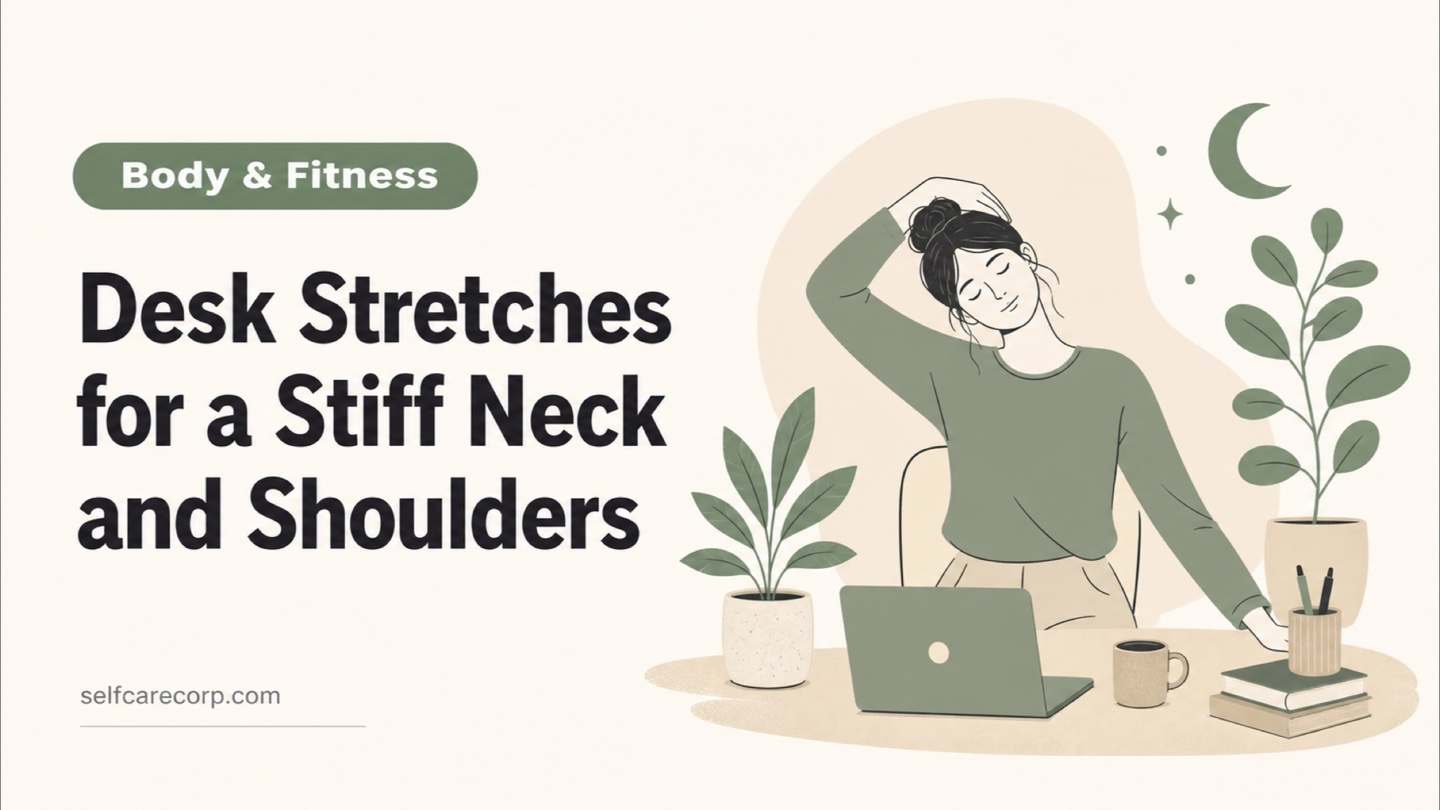
- Neck release: drop your chin toward your chest and hold for 15 to 30 seconds, then gently tip your right ear toward your right shoulder for 15 to 30 seconds and repeat on the left.
- Shoulder rolls: slowly roll your shoulders backward five times, then forward five times, letting them drop away from your ears.
- Chest and upper-back opener: clasp your hands behind your back and gently straighten your arms to open the chest for about 20 to 30 seconds; if that feels tight, simply reach both arms out wide instead.
- Wrist and forearm stretch: extend one arm in front of you, palm up, and use your other hand to draw your fingers gently down toward the floor, holding 15 to 30 seconds before switching sides.
- Seated spinal twist: sit tall, place one hand on the outside of the opposite knee, and turn gently toward the back of your chair, holding 15 to 30 seconds on each side.
- Stand and reach: stand up, lace your fingers, and reach overhead; then hold the edge of your desk and step one foot back to feel a light stretch through the calf and back of the leg for 15 to 30 seconds each side.
If you'd rather glance than read, here is the same routine at a glance:
| Stretch | Main target | Hold time |
|---|---|---|
| Neck release | Neck and upper shoulders | 15–30 sec each side |
| Shoulder rolls | Shoulders | 5 rolls each way |
| Chest opener | Chest and upper back | 20–30 sec |
| Wrist and forearm | Wrists and forearms | 15–30 sec each side |
| Seated twist | Mid and lower back | 15–30 sec each side |
Is it safe to stretch at your desk?
For most healthy adults, gentle desk stretches are low-risk as long as you move slowly and stay within a comfortable range. Keep breathing steadily instead of holding your breath, avoid bouncing or forcing a position, and ease off the moment you feel anything sharp or pinching rather than a mild pull. Mayo Clinic's office-stretch guidance emphasizes steady, controlled stretches over quick, jerky movements.
An honest caveat: this is general self-care, not medical advice. If you're pregnant, recovering from an injury, or living with a condition that affects your joints or nerves, check with a doctor or physical therapist before you start. And if a particular stretch reliably triggers pain, treat that as a signal to have it looked at rather than something to push through.
How to make desk stretches a habit that sticks
The routine only helps if you actually do it, and the dependable trick is to attach stretching to something you already do rather than leaning on willpower. Tie a neck release to your first coffee of the morning, do shoulder rolls at the end of each meeting, or set a gentle reminder to stand every 45 minutes. Anchoring a new behavior to an existing cue is the same small-and-consistent approach behind building healthy habits that actually stick.
It also helps to see these pauses as part of looking after yourself, not as time stolen from work. Short movement breaks can protect your focus and energy through the day, right alongside the other small habits that guard your time and energy. Start with one stretch you'll remember, and let the rest build from there.
This article is for general information and self-care education only. It is not medical advice, diagnosis, or treatment. For questions about your health, talk to a qualified healthcare professional.