Type 2 vs Type 3 Diabetes: What the Terms Actually Mean
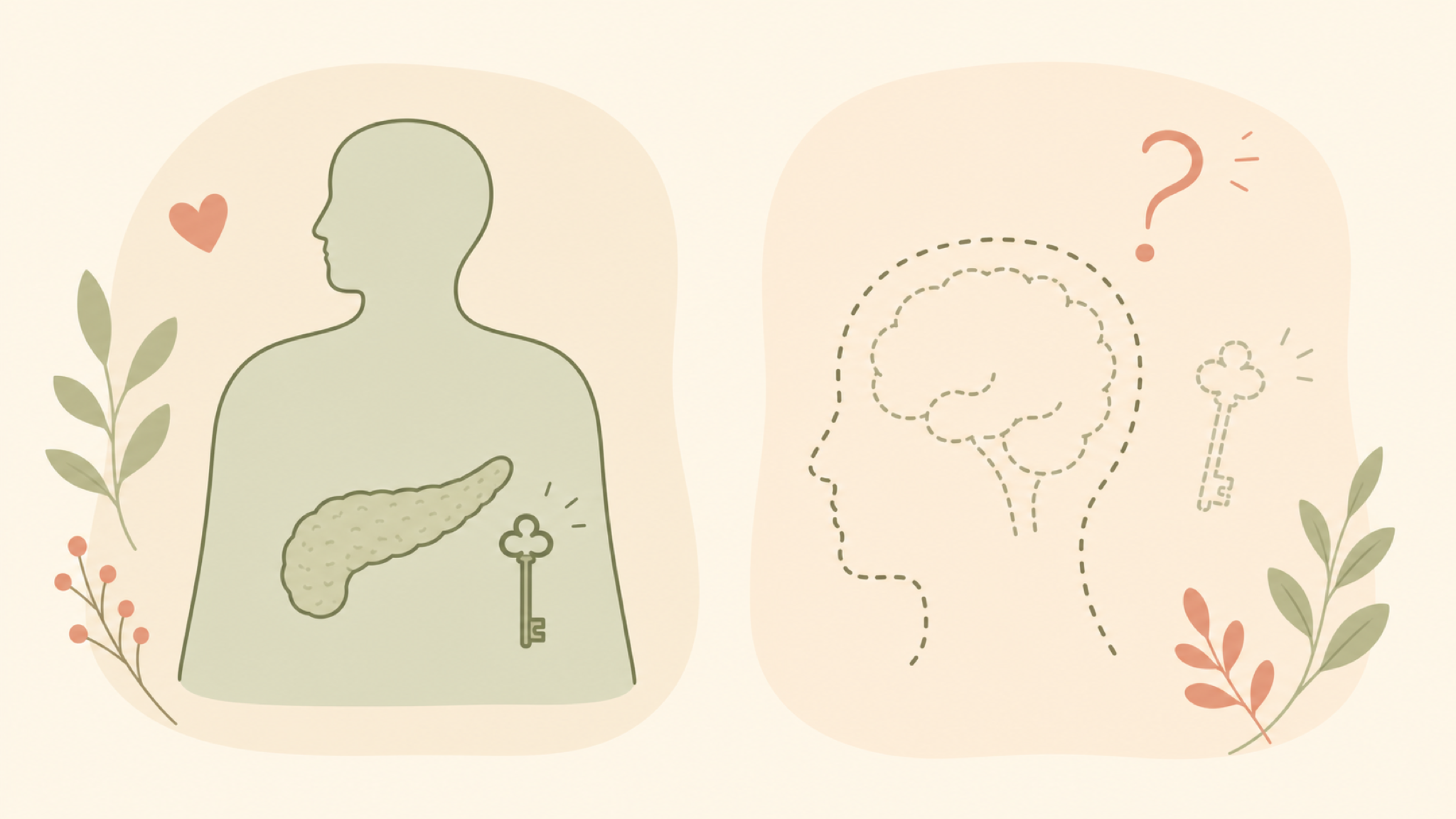
Type 2 diabetes is a recognized insulin-resistance condition. 'Type 3 diabetes' is an informal research term for Alzheimer's, not an official diagnosis.
Table of contents
If you have run into the phrase 'type 3 diabetes' and wondered how it stacks up against type 2, here is the short version. Type 2 diabetes is a widely recognized condition in which your body stops responding well to insulin, the hormone that moves sugar out of your blood and into your cells for energy. 'Type 3 diabetes' is not an official diagnosis at all. It is an informal term some researchers use for Alzheimer's disease, built on the idea that the brain can develop its own form of insulin resistance. As of 2026, the American Diabetes Association does not list type 3 diabetes as a recognized type. Think of this as a plain-language explainer for curious readers, not medical advice or a diagnosis. If you are worried about your blood sugar or your memory, your doctor is the right person to sort it out with you.
What type 2 diabetes actually is
Type 2 diabetes is the most common form of diabetes. According to the U.S. Centers for Disease Control and Prevention, it develops when your cells stop responding normally to insulin, a state called insulin resistance. Your pancreas tries to make up the difference by pumping out more insulin, and for a while it manages. Over time it often can't keep up, so sugar builds up in your bloodstream instead of fueling your cells. You can read the CDC's plain-language overview on its diabetes information pages. A doctor confirms it with a blood test, and many people keep it in check with a mix of daily habits and, when needed, medication. The point for this comparison is simple: type 2 is a defined, testable condition with clear diagnostic criteria.
What does 'type 3 diabetes' actually mean?
Short answer: it is a nickname, not a diagnosis you can receive. Researchers including Suzanne de la Monte have proposed the term 'type 3 diabetes' to describe Alzheimer's disease as a condition involving insulin resistance in the brain. The argument, laid out in review papers published in the mid-2000s, is that when brain cells stop responding well to insulin, that breakdown may feed the plaques and inflammation seen in Alzheimer's. This is a real and active research question, and studies have connected type 2 diabetes and prediabetes to a higher risk of dementia later in life. Still, 'type 3 diabetes' is a proposed label rather than something a lab test confirms. The Alzheimer's Association treats the brain-insulin connection as an area of ongoing study, not a settled disease category. In other words, no one walks out of a clinic today with 'type 3 diabetes' written on their chart.
Type 2 vs type 3 diabetes at a glance
Here is how the labels line up side by side, including a third term that adds to the confusion.
| Term | What it refers to | A diagnosis you can receive? |
|---|---|---|
| Type 2 diabetes | The body resists insulin and blood sugar rises | Yes, confirmed by blood tests |
| 'Type 3 diabetes' | An informal research term for Alzheimer's and brain insulin resistance | No, not an official diagnosis |
| Type 3c diabetes | Diabetes that follows damage to the pancreas | Yes, a recognized type that is often mislabeled |
The other 'type 3': diabetes from the pancreas
This is where the numbers get slippery. There is a separate, officially recognized condition called type 3c diabetes, also known as pancreatogenic diabetes. The American Diabetes Association and the World Health Organization both recognize it. Unlike type 2, type 3c develops after the pancreas itself is damaged, for example by chronic pancreatitis (long-term inflammation of the pancreas), pancreatic surgery, or pancreatic cancer. Reviews in medical journals estimate that pancreatic disease accounts for roughly 5 to 10 percent of diabetes cases in Western countries, and they note that type 3c is often mistaken for type 2 because the two can look alike. So 'type 3' can point to two very different things depending on who is saying it: an unofficial nickname for Alzheimer's, or the recognized type 3c tied to the pancreas.
What can you do for your own well-being?
You do not need to master the labels to take good care of yourself. The habits that support steady blood sugar are the same gentle, everyday ones that support the rest of your health, including your brain. None of this is a treatment plan, just the kind of small, repeatable self-care that adds up.
- Move a little most days. Even a 10-minute walk after a meal counts, and it is easier to keep up than an all-or-nothing gym plan.
- Build meals around vegetables, protein, and whole grains, and treat sugary drinks as an occasional thing rather than a daily default.
- Notice your patterns. If tracking appeals to you, a simple log of how you eat, sleep, and feel can surface trends you would otherwise miss, which is the same reason keeping a written record can help your mood, sleep, and habits.
- Pay attention to your body's signals and learn when they matter, the way you might with the signs of high cortisol.
- Ask your doctor for a simple blood sugar check if diabetes runs in your family or you notice symptoms like frequent thirst, blurry vision, or lingering fatigue.
If one of these terms is what brought you here because something has you worried, that worry is worth taking to a healthcare provider who can look at your whole picture. The names matter far less than the care you give yourself along the way.
This article is for general information and self-care education only. It is not medical advice, diagnosis, or treatment. For questions about your health, talk to a qualified healthcare professional.