Healthy Body Fat Percentage for Men: What the Numbers Mean
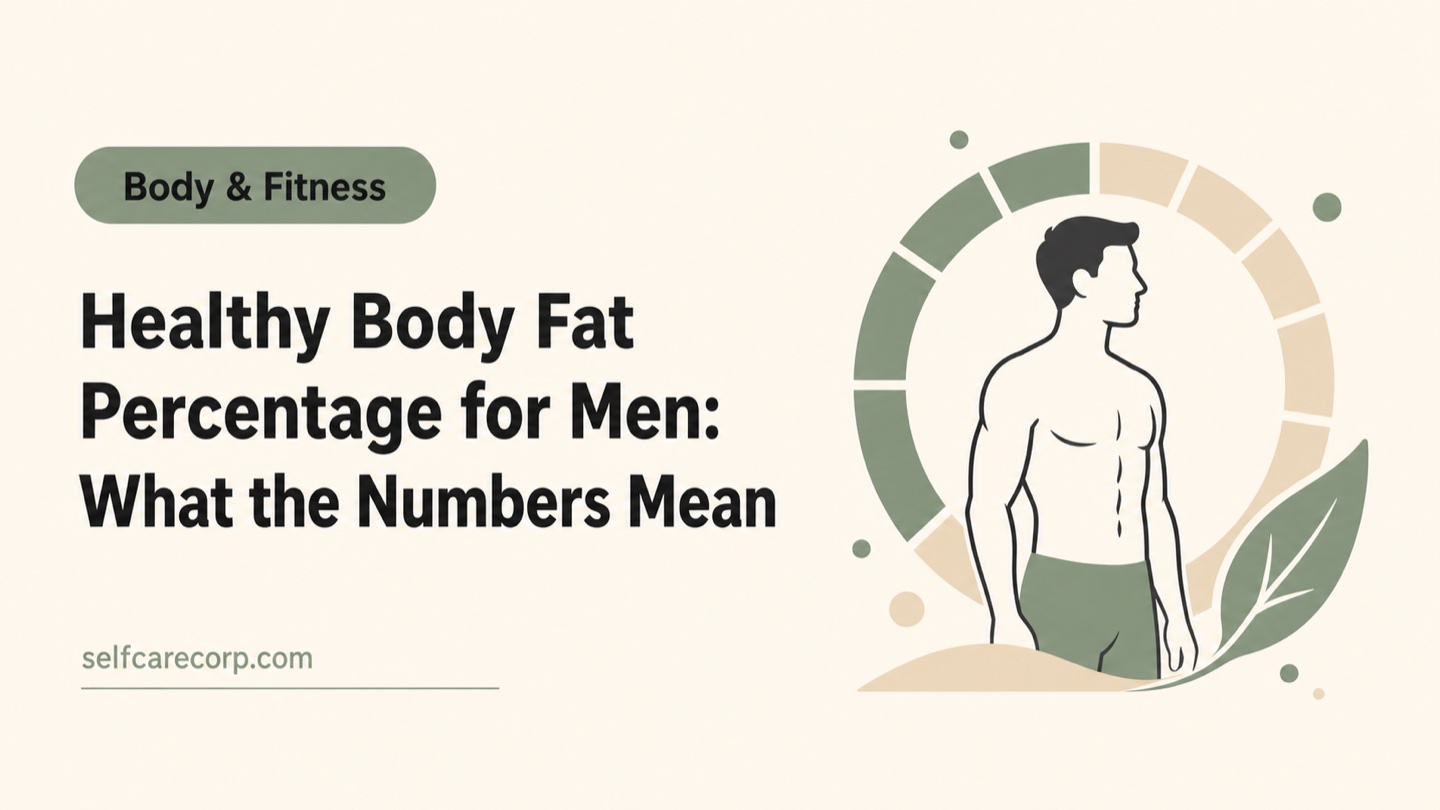
The American Council on Exercise lists a healthy body fat range for men around 14–24%. Here's what the categories mean and how it's measured.
Table of contents
If you've stepped off a body composition scanner and wondered whether your number is "good," here's the short answer: the American Council on Exercise (ACE) lists a body fat range of roughly 14 to 24 percent as fit-to-acceptable for men, with 25 percent and above falling into its obese category. This guide walks through those reference ranges for adult men, what they actually describe, how body fat gets measured, and why one number rarely tells the whole story. It's general wellness information for everyday readers, not a medical assessment—if you have specific health concerns, a doctor or registered dietitian can read your numbers in context.
What counts as a healthy body fat percentage for men?
For most active men, a body fat level in the mid-teens to low twenties is a realistic, sustainable place to be. The American Council on Exercise sorts men into five bands, and the two in the middle—"fitness" and "acceptable"—are where the majority of healthy men land.
| Category | Body fat (men) | What it usually looks like |
|---|---|---|
| Essential fat | 2–5% | The bare minimum the body needs; not safe to hold long term |
| Athletes | 6–13% | Very lean, with clearly visible muscle |
| Fitness | 14–17% | Fit and defined; sustainable for active men |
| Acceptable | 18–24% | Healthy but softer; where many men sit |
| Obese | 25% and up | ACE's cutoff for its obese category |
Those bands come from the American Council on Exercise chart that trainers reach for most often. Essential fat—the 2 to 5 percent your body relies on for basics like hormone production and cushioning your organs—isn't a goal to chase; sitting at that level for long stretches can cause real trouble. At the other end, ACE marks 25 percent and higher as its obese range for men.
Why the healthy range shifts as you get older
The same percentage doesn't carry the same meaning at 25 and at 65, and a slightly higher number later in life is completely normal. Harvard Health Publishing notes that body fat percentages tend to run higher in adults 60 and older than in younger adults.
The main reason is muscle. Muscle mass naturally declines with age, so even if the scale holds steady, the share of your weight that's fat can creep up. That's why a man might weigh the same at 55 as he did at 30 yet carry a higher body fat percentage. It's also why the "right" target is a range rather than a single magic number.
Worth knowing: Harvard Health Publishing also points to research that labels 25 percent body fat or more as overweight and 30 percent or more as obese for men. Those cutoffs sit a little differently from ACE's chart, which is a helpful reminder that the exact lines depend on which framework you're reading.
How is body fat actually measured?
No at-home or gym method is perfectly precise, so it pays to know the trade-offs before you put full faith in one reading.
- DEXA (DXA) scan — a low-dose X-ray body scan that clinicians and researchers widely treat as the reference standard, with an error margin around ±0.5 to 2 percent. It's the most accurate option and the priciest, commonly running from about $45 to $400 per session.
- Bioelectrical impedance (BIA) — the technology inside smart scales and gym devices such as InBody. It sends a tiny electrical current through you and estimates fat from the resistance it meets. Convenient and cheap, but its margin runs roughly ±4 to 10 percent, and readings shift with how hydrated you are, when you last ate, and the time of day.
- Skinfold calipers — a trained person pinches and measures fat at set spots on your body. The margin lands around ±3.5 to 5 percent and leans heavily on the tester's skill and consistency.
Because of that spread, the number matters less than the method behind it. This is especially true for the everyday tools most of us reach for: a smart scale or handheld BIA reading can swing by a couple of percentage points from one day to the next, depending on how hydrated you are, what you've eaten recently, and when you last worked out. So take your reading under the same conditions each time—same time of morning, before you eat—and compare week to week rather than reading into any single morning. If you want to track change over time, use the same tool that same way each time—otherwise you're comparing apples to oranges.
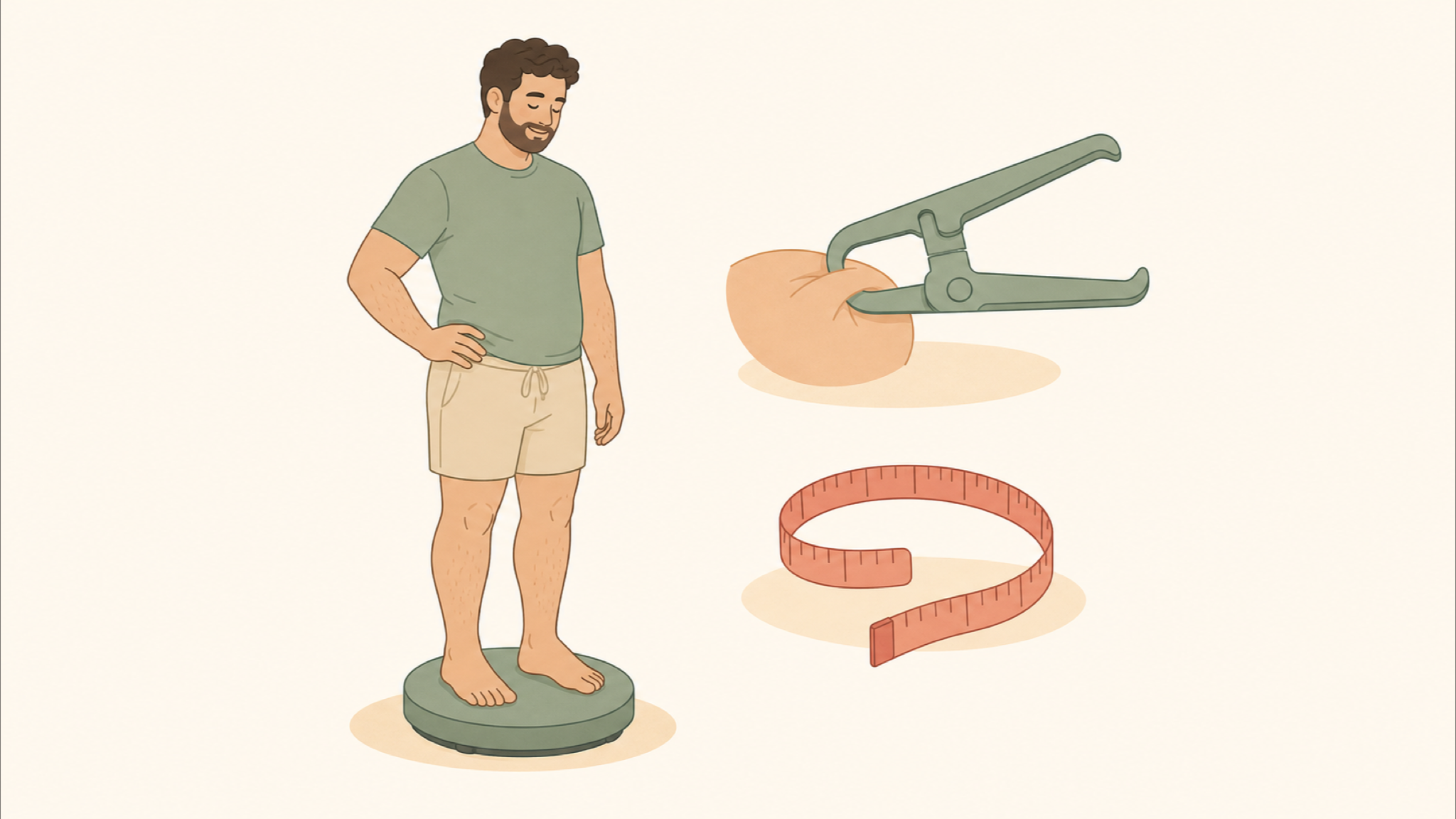
Body fat is one signal, not the whole story
A single fat percentage can't see your muscle, your energy, your sleep, or your habits, so pairing it with one or two simple measures gives you a fuller read. Harvard Health Publishing suggests using more than one measurement and watching the trend over time rather than leaning on any single snapshot.
Two easy ones you can do at home:
- Waist circumference. Harvard Health Publishing flags a waist of 40 inches or more in men as a marker of higher health risk. Measure around your belly button, relaxed, without sucking in.
- Waist-to-height ratio. Divide your waist by your height in the same units; Harvard points to a healthy band of 0.4 to 0.49. A simple version that lands in that range: keep your waist under half your height.
None of these replace a conversation with a doctor, but together they paint a steadier picture than one body fat reading ever could.
Simple habits that move body composition in the right direction
You don't need a crash plan to shift your numbers gently over time—you need a few things you'll actually keep doing. Because muscle fades with age, movement that includes a little strength work does more for body composition than any single food rule. Two short strength sessions a week is a doable starting point, and if you're coming off a still stretch, our 4-week walking plan for total beginners is a gentle on-ramp.
Food matters too, but not in a punishing way. Eating enough protein and fiber to feel genuinely full is what keeps you off the snack-then-crash treadmill. The part that decides whether any of this sticks is consistency, and that's less about motivation than about design—building habits without relying on willpower tends to outlast any burst of New Year energy.
Reading the number without letting it run your day
Most healthy men land somewhere in ACE's 14 to 24 percent span, and where you sit inside it matters far less than how you feel, move, and sleep. Treat a body fat reading as a rough compass, not a verdict—useful for spotting a trend, not for judging a single morning. A healthy range you can maintain year-round is worth far more than the lowest number you could reach for a week or two. If you want a target that fits your body, your age, and your health history, a doctor or registered dietitian can set one with you.
This article is for general information and self-care education only. It is not medical advice, diagnosis, or treatment. For questions about your health, talk to a qualified healthcare professional.