Why Some People Don't Post Photos on Social Media
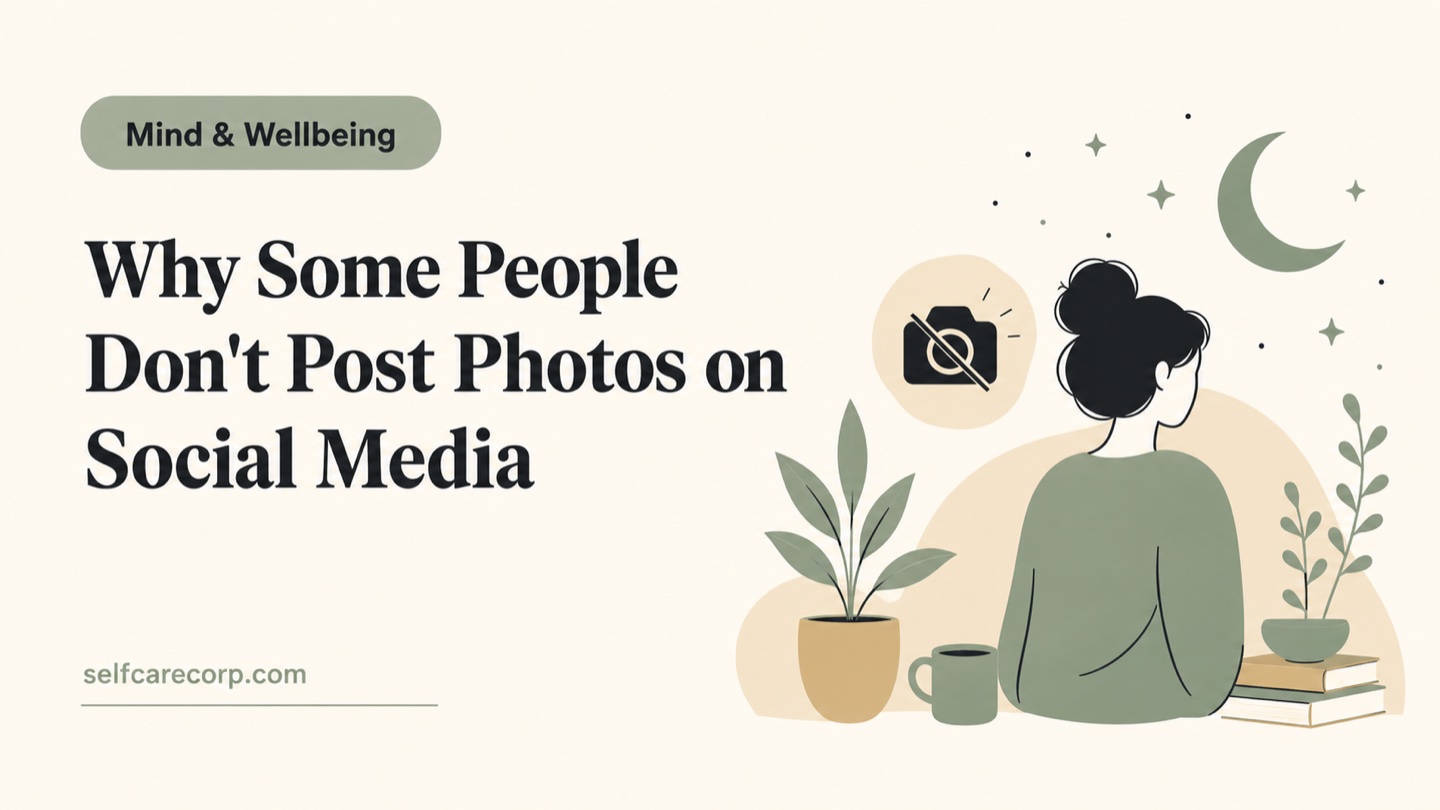
Some people skip posting photos to guard their privacy, dodge comparison, or stay present. Here's the wellbeing case for posting less, or not at all.
Table of contents
If you know someone who almost never posts photos, or you have quietly become that person yourself, the reasons are usually simpler than they look. People hold back for a mix of privacy, the mental effort of curating a feed, a wish to be in the moment without an audience, and plain personal taste. None of it means something is wrong. Pew Research Center has reported that most U.S. adults feel they have little control over their personal data, and choosing not to share is one small way to keep some of that control.
This is a look at the self-care side of that choice for everyday adults, not people who post for work or run a business account, and it isn't medical or mental-health advice. If not posting ever feels less like a preference and more like hiding from people you care about, that part is worth talking through with someone you trust.
So why do people skip posting their photos?
The short version: posting carries a cost, and for some people it outweighs the reward. On image-first apps like Instagram and TikTok, the pressure to look a certain way is built into the format, so opting out is often the simplest way to sidestep it.
The usual reasons cluster into a few groups:
- They'd rather not hand their face, home, or location to a public feed.
- Comparing their real day to everyone's highlights leaves them flat.
- Framing the "perfect" shot pulls them out of the moment they're in.
- They keep photos for themselves and a few close people, not for likes.
Notice that none of these point to a problem. More often, choosing not to post is a quiet act of self-protection.
The hidden work of a "casual" post
Posting a photo stops feeling casual the moment you're actually doing it. You choose the shot, tweak it, second-guess the caption, and picture how it will land. That's real effort, even when it happens fast.
Researchers Alixandra Barasch, Gal Zauberman, and Kristin Diehl looked at exactly this. In a set of studies published in the Journal of Consumer Research with more than 2,800 participants, they found that people who took photos meaning to share them enjoyed the experience less than people who took photos just for themselves. The culprit they pointed to was self-presentational concern, the quiet worry about how you'll come across. Not posting skips that worry entirely.
Comparison and the highlight reel
Social comparison is the everyday habit of measuring yourself against other people. On a photo feed, almost everything you see is someone's chosen best: good light, good angle, good day. Holding your ordinary afternoon up against a stranger's vacation is what researchers call upward comparison, and people who study social media have repeatedly tied heavy upward comparison to lower self-esteem and more frequent low moods, especially for those who do it often.
Stepping back from posting can loosen that loop. When you're not performing your own life, you're less likely to keep score of everyone else's. A rough gut-check: after ten minutes of scrolling, do you feel more like yourself, or less? If the answer is usually "less," posting less is a fair response.
Privacy is a boundary, not a secret
A lot of the time, not posting is simply about privacy, and the numbers say that instinct is common. In its October 2023 report on data privacy, drawn from a survey of 5,101 U.S. adults, Pew Research Center reported that 73% of Americans felt they had little or no control over what companies do with their data, and 67% said they don't understand what companies do with it, up from 59% in 2019. You can see the full findings in Pew Research Center's data privacy report.
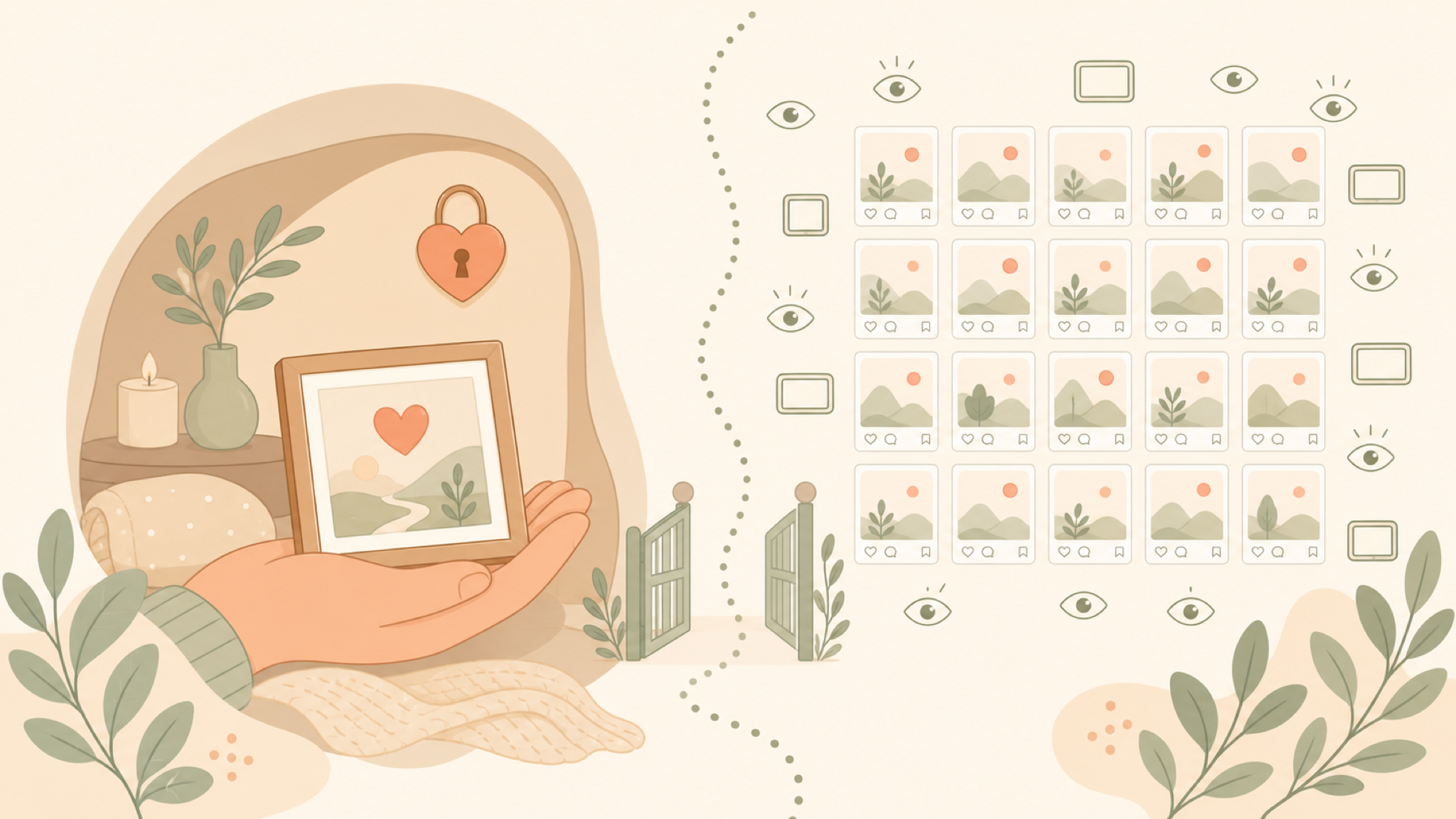
Set against that, keeping your child's face, your street, or your daily location off a public feed isn't paranoia. It's a small, sensible line, the kind of boundary you're allowed to draw without explaining it to anyone.
Is it healthier to stop posting photos?
Not on its own. Stepping back helps if posting leaves you anxious, performative, or stuck comparing yourself to strangers. It doesn't help if the real change is that you're drifting away from people who matter to you.
A simple way to tell them apart is to notice whether you still feel connected. A quick message to one friend usually does more for your mood than a polished post to hundreds of followers. Privacy that protects your peace is a good boundary. Withdrawal that leaves you lonelier is worth a closer look.
Finding your own comfortable line
You don't have to choose between "post everything" and "post nothing." Most people settle somewhere in between, and a few small habits make that spot easier to find.
- Take the photo for yourself first. Capture the moment, then decide later whether it needs an audience. Keeping images as a private record rather than a public one can lift your mood on its own, which is part of why a simple personal log helps your sleep and habits.
- Try a one-day pause. Sit on a photo for 24 hours before posting. A lot of the time the urge passes and you never miss it.
- Share small instead of public. Send the picture to a close-friends list or a family chat. You keep the connection without the audience.
- Check how you feel afterward. Living a moment usually beats performing it, and noticing that gap is part of finding more joy in small, unshared moments.
If you love taking photos but not sharing them, that is a complete way to enjoy them. And if you love posting, that's good too. The healthiest setting is the one you picked on purpose, not the one the app nudged you into.
This article is for general information and self-care education only. It is not medical advice, diagnosis, or treatment. For questions about your health, talk to a qualified healthcare professional.